

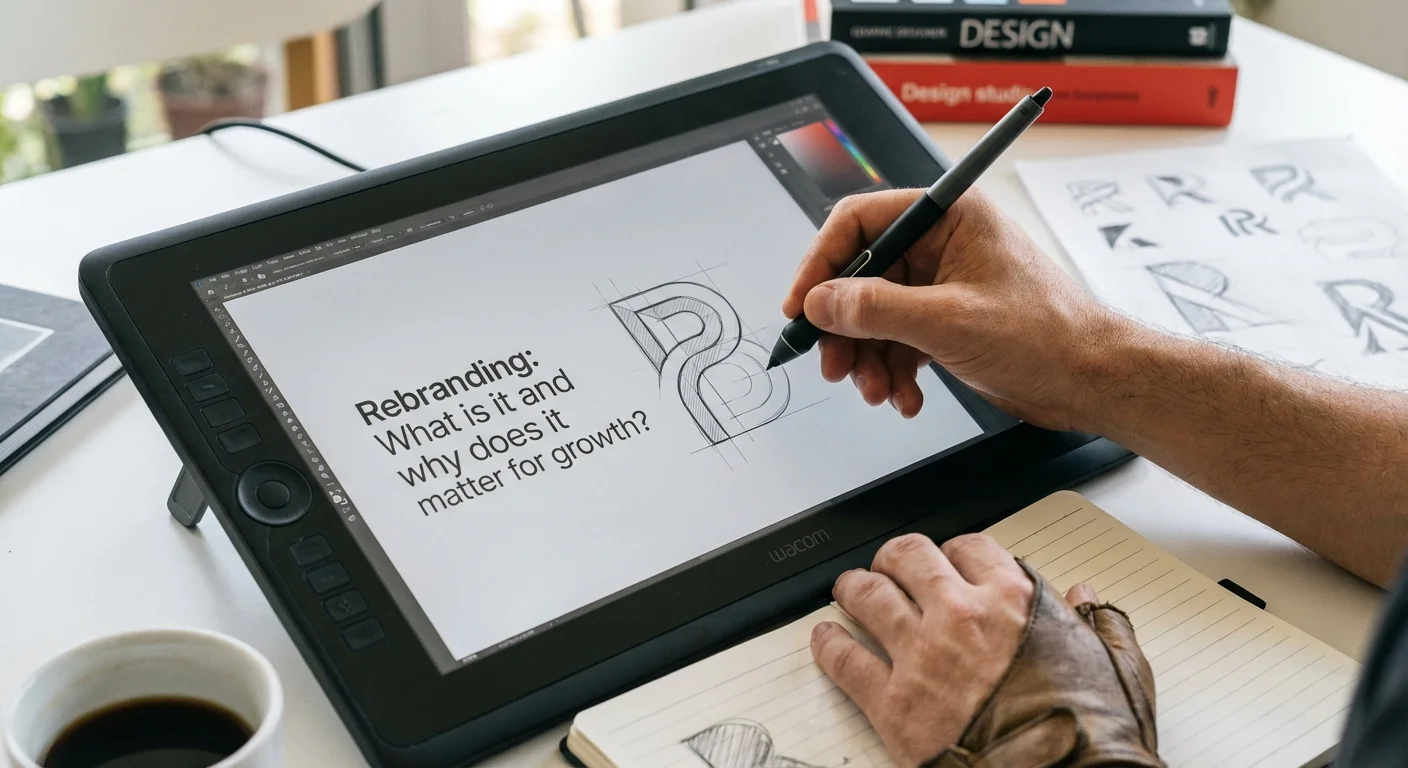
Rebranding is the strategic process of evolving your brand identity to stay relevant in a changing market. It is time for a new look when your current image no longer aligns with your business goals, target audience, or core values. In today’s competitive landscape, standing still means falling behind. Whether you are navigating a merger or working with an outdated vision, a well-planned rebrand can act as a powerful catalyst for growth.
The process goes beyond a new logo. It requires a deep dive into your market positioning. With the right strategy, you can translate a visual transformation into measurable commercial success and reconnect with the modern consumer.
Rebranding is the strategic process

- Identify the gap between your current brand and your business evolution.
- Reach new demographic or international markets.
- Modernize your aesthetic for a digital competitive edge.
What Is Rebranding and Why Does It Matter for Growth?
In the evolving landscape of modern commerce, a brand is far from static. It is a living entity that must adapt to market conditions, shifting consumer behaviors, and internal shifts. At its core, Rebranding is the strategic process of changing the corporate image of an organization. It is a market strategy of giving a new name, symbol, or design change for an established brand. The primary idea is to create a different identity for a brand, from its competitors, in the minds of stakeholders and customers.
Many business owners believe that a brand refresh is merely about a new logo. However, true Rebranding goes deeper than surface-level aesthetics. It involves a fundamental rethink of the company’s mission, values, and unique value proposition. When executed correctly, it serves as a catalyst for business expansion, allowing a company to shed outdated perceptions and align itself with the future trajectory of its industry.
Why does this matter? The answer lies in the psychological connection between a brand and its audience. As markets become saturated, standing out becomes difficult. A stale brand can act as an anchor, dragging down innovative products. By engaging in a thoughtful Rebranding process, a company signals that it is evolving and ready to meet new challenges. This signal often attracts new demographics that were previously unreachable.
Growth is rarely linear. There are plateaus where traditional marketing efforts yield diminishing returns. In these moments, Rebranding acts as a reset button. It provides a fresh narrative for sales teams, a new visual language for marketing, and a renewed sense of purpose for employees. Internal alignment is an overlooked benefit; when staff believe in the “new” brand, their productivity and advocacy naturally increase, fueling organic growth from the inside out.
The Strategic Pillars of a Successful Transformation
To understand the scope of this transformation, we must look at the layers involved. It is not a one-size-fits-all solution. Depending on goals, a company might opt for a partial refresh or a total overhaul. Regardless of depth, the objective remains relevance. In a world where digital presence is paramount, ensuring your brand resonates across touchpoints is essential. For those looking to optimize internal processes before a shift, checking out a definitive guide to make a daily more productive working flow can provide the foundation for managing such a project.
Consider these reasons why companies prioritize Rebranding as a growth lever:
- Market Repositioning: Moving from a budget perception to a premium status to increase profit margins.
- International Expansion: Adjusting visual and verbal language to resonate with cultural nuances in new territories.
- Mergers and Acquisitions: Creating a unified identity after two entities become one, ensuring a cohesive culture.
- Technological Evolution: Updating a brand that looks “analog” to reflect a digital-first or AI-driven model.
- Targeting New Demographics: Shifting focus from an aging customer base to younger generations like Gen Z.
“A brand is no longer what we tell the consumer it is—it is what consumers tell each other it is. Rebranding is the art of influencing that conversation through intentional design and storytelling.”
The process of strategische Rebranding voor groeiende bedrijven requires a deep dive into data. You cannot change who you are without knowing where you stand. This involves competitive analysis, customer surveys, and an audit of existing assets. Without this data-driven approach, changes are merely guesswork. Growth happens when the gap between “who we are” and “who our customers need us to be” is closed through strategic design.
Furthermore, Rebranding is a defensive move. In industries facing disruption, staying the same is equivalent to moving backward. By proactively updating your brand, you insulate yourself against competitors who might paint your company as “out of touch.” It allows you to reclaim the narrative and position your business as a leader. This leadership position is where significant growth opportunities reside, as it builds trust and authority.
It is also important to recognize the role of user experience. A brand is not just seen; it is experienced. If your visual identity changes but your digital interface remains clunky, the Rebranding effort will feel hollow. Integration is key. Every click, customer service interaction, and social media post must reflect the new brand promise. This holistic approach ensures that the investment translates into tangible results, such as increased customer lifetime value.
Ultimately, Rebranding is about future-proofing. It is an admission that the strategies that got you here might not be the ones that get you to where you want to be tomorrow. By embracing change, businesses can unlock hidden potential and embark on a new chapter of scalability. It is a bold move, but for those who navigate it with clarity, the rewards in market share and brand equity are unparalleled. As we move further, we will explore the technical steps required to turn this vision into reality, ensuring your brand remains an engine for long-term success.
Key Signs Your Current Brand Identity Is Outdated
Recognizing that your brand identity has lost its edge is the first step toward evolution. In a marketplace that moves at lightning speed, a visual identity that felt revolutionary five years ago might now appear stagnant. Business owners often hesitate to change because of perceived complexity, but ignoring warning signs can lead to a decline in market share. Understanding when to pull the trigger on a Rebranding initiative is a critical skill for leadership.
One obvious indicator is a visual aesthetic that feels “stuck” in an era. Design trends evolve; what was once considered sleek might now look generic. If your typography, color palette, or logo style screams 2010, you are inadvertently telling your audience that your solutions are also outdated. This disconnect creates a barrier of trust before a potential customer even engages with your service.
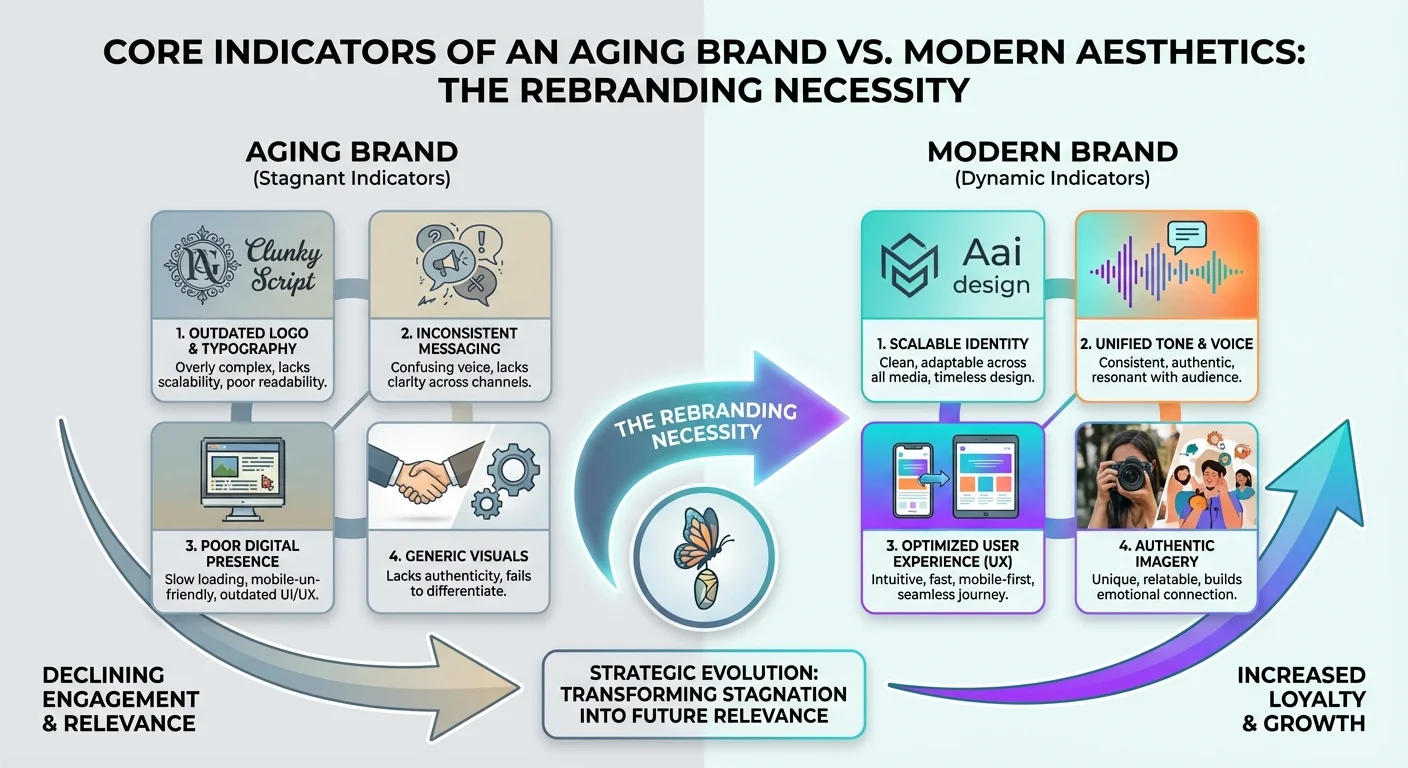
Consistency is the backbone of recognition. However, as companies grow, they often suffer from “brand creep.” This happens when new marketing materials are created ad-hoc without following a centralized style guide. Over time, your social media looks different from your website. If your team is struggling to maintain a cohesive look because original guidelines no longer fit your platforms, it is a clear sign that strategic rebranding for growing businesses is required to unify your voice.
Another red flag is a shift in your core audience. Brands exist to serve people. If your original identity was designed for Baby Boomers but your primary demographic has shifted to Gen Z, your messaging will likely fall flat. Younger generations value different aesthetics and ethical stances. If your brand does not reflect these modern values, you risk becoming invisible. Rebranding allows you to realign your visual language with the expectations of your current target market.
Internal Disconnect and Competitive Pressure
Sometimes signs are internal. Do employees feel proud to hand out business cards? Does your sales team feel the current presentation deck accurately represents the quality of their work? When there is a gap between internal culture and external image, morale can suffer. Your brand should be a source of pride. If it feels like a chore to use your own brand assets, the system is broken.
Competitive benchmarking also reveals when it is time for change. Take a look at direct competitors. If they have modernized their look while you have remained the same, you may appear as the “legacy” option in a negative sense. While being established is an asset, appearing archaic is a liability. Rebranding helps you reclaim your position as an industry leader rather than a follower of old traditions.
- Your logo does not scale well on mobile devices or favicons.
- The company has expanded into new industries that current visuals don’t cover.
- Your brand story no longer reflects your actual mission or values.
- Potential clients frequently misunderstand what you do based on visuals.
- You find yourself constantly explaining “who we are now” versus “who we used to be.”
Technical limitations are often overlooked. Older brand identities were often designed for print. In today’s digital-first world, your brand must perform across high-resolution screens and dark mode settings. If your current color palette fails accessibility tests or your logo loses detail when shrunk for an app icon, you are facing a functional crisis that only a comprehensive Rebranding process can solve.
“A brand is no longer what we tell the consumer it is—it is what consumers tell each other it is. If your identity is outdated, the conversation about your brand will be about your past, not your future.”
Mergers and acquisitions are also a primary catalyst. When corporate cultures collide, existing brand identities often clash. Trying to force one into the other rarely works. Instead, a fresh Rebranding strategy can create a “new North Star” that everyone can align with. It signals a new chapter and a unified front to the public.
Ultimately, Rebranding is about closing the gap between who you are today and how the world perceives you. If your business has innovated or refined its service model, but your brand looks exactly as it did ten years ago, you are leaving money on the table. You are essentially hiding progress behind an old mask. A brand should be a mirror of your current excellence and a window into your future ambitions.
Don’t wait for a total loss of relevance before acting. Successful companies treat Rebranding as a proactive measure. By identifying these signs early—whether visual fatigue, audience misalignment, or technical obsolescence—you can navigate the transition smoothly and maintain momentum. Your brand is your most valuable intangible asset; ensure it is working for you, not against you.
In conclusion, if you find that marketing efforts are yielding diminishing returns despite a high-quality product, the problem likely lies in your identity. Rebranding provides the necessary reset to capture attention. It is an investment in longevity and a declaration that you are ready for the challenges of the next decade. Keep a close eye on these indicators to ensure your brand remains as vibrant as the business it represents.
Strategic Reasons to Consider a Rebranding Process
Deciding to overhaul your corporate identity is a calculated maneuver that requires deep introspection. When we discuss the strategic reasons behind a Rebranding initiative, we are looking at the alignment between a company’s visual presence and its operational reality. Often, a business outgrows its original skin, leaving a disconnect that confuses customers and hampers growth.
One primary driver is a significant shift in the company’s mission. As organizations mature, they frequently pivot to address new challenges. If your current brand reflects a version of your company that no longer exists, you are operating under a false pretense. This misalignment can lead to a loss of trust among your most loyal stakeholders.

Market evolution is another catalyst. Industries are living ecosystems that change with technological advancements. A brand that looked cutting-edge in 2015 might look dated today. To remain competitive, companies must ensure their aesthetic and messaging resonate with contemporary sensibilities. This is where a professional Rebranding strategy becomes the bridge between legacy and future relevance.
Consider the following strategic indicators that suggest it is time for a change:
- Mergers and Acquisitions: A new identity is often required to represent the combined strength of the new organization.
- Negative Reputation Management: If a brand has been tarnished, a fresh start can help decouple the business from historical baggage.
- International Expansion: A name or logo that works in one country might lack impact in another, necessitating a global effort.
- Target Audience Shift: If you are moving from a B2B model to a B2C model, your tone of voice and visual language must adapt.
Furthermore, internal culture often dictates the need for a refresh. Employees want to work for a brand they feel proud of—one that feels modern and forward-thinking. A successful Rebranding can act as a powerful internal rally cry, boosting morale and attracting top-tier talent who are looking for a company with a clear vision.
“A brand is no longer what we tell the consumer it is—it is what consumers tell each other it is. Strategic change ensures you are part of that conversation in the right way.”
Competitive differentiation is perhaps the most aggressive reason to pursue a Rebranding project. In a saturated market, “blending in” is equivalent to being invisible. If your competitors all use similar color palettes and messaging, you have an opportunity to break the mold. By zigging when others zag, you position your company as a leader, making it easier for potential clients to choose you.
However, many executives fear the complexity of the transition. They worry about losing brand equity. This is why a strategic Rebranding aanpak voor groeiende bedrijven is essential. It ensures that while the “look” changes, the core promise that customers love remains intact, just presented in a more effective and modern package.
Technological shifts also play a role. In the era of mobile-first consumption, logos designed for print often fail to scale down to a smartphone screen. A Rebranding process allows a company to optimize its assets for the digital age, ensuring that the brand remains legible across every touchpoint, from a billboard to a tiny app icon.
- Increased Market Value: A modern, cohesive brand often commands higher price points and attracts premium investors.
- Clarified Messaging: It removes the “clutter” of old services or outdated slogans that no longer serve business goals.
- Enhanced Customer Loyalty: By showing that the brand is evolving, you demonstrate a commitment to staying relevant.
The process is not merely about a new logo; it is about a holistic transformation. It involves auditing every piece of communication, from email signatures to physical office space. It is an opportunity to fix the “cracks” in your brand story that have developed over years. When done correctly, Rebranding doesn’t just change how you are seen; it changes how you operate, forcing clarity that benefits every department.
Ultimately, the decision to rebrand should be rooted in data and long-term vision. It is an investment in the future. By identifying strategic gaps in your current identity, you can build a foundation that supports the next decade of growth, ensuring that your brand remains a powerful asset rather than a liability in an ever-changing marketplace.
The Difference Between a Brand Refresh and a Total Overhaul
Deciding how to evolve your business identity is a pivotal moment. Many leaders wonder whether they need a subtle update or a complete transformation. Understanding the nuances between a brand refresh and a full-scale Rebranding initiative is essential to ensure resources are allocated effectively and your market position remains secure.
A brand refresh is often compared to a home renovation where you paint the walls, but the structural foundation remains untouched. It is a tactical maneuver designed to modernize a look that has become slightly dated without losing the equity built over years. In contrast, a total overhaul is a strategic pivot that fundamentally changes how the world perceives your company, often involving a new mission or a completely different target audience.
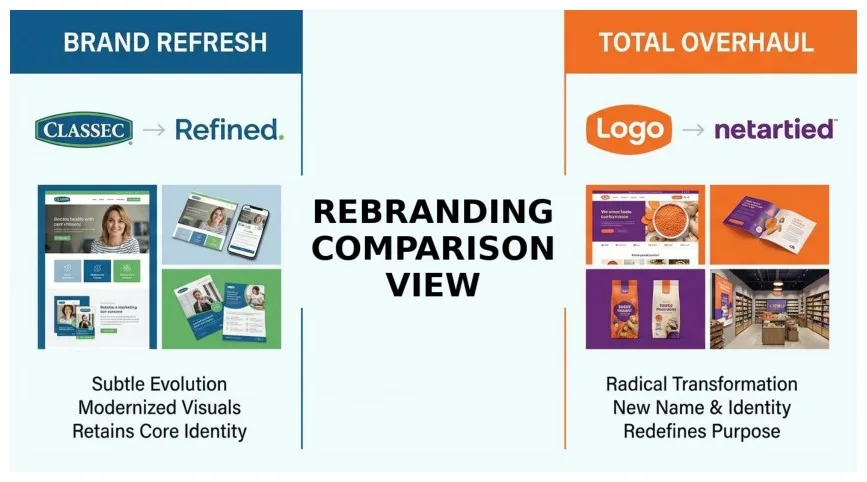
When we look at a brand refresh, the core DNA stays the same. You might see a slight adjustment to the color palette or a more contemporary font choice. The goal here is “evolution, not revolution.” This approach is ideal for successful companies that simply want to stay relevant in a fast-moving landscape. It allows you to maintain continuity, ensuring that long-term customers still recognize your visual identity while attracting newer demographics who value modern aesthetics.
On the other side, a total overhaul – or comprehensive Rebranding – is a deep-rooted change. This is not just about aesthetics, it is about a shift in the soul of the business. This often occurs after a significant merger or a realization that the current brand no longer reflects the company’s actual services. If your business has outgrown its original vision, a refresh will not suffice. You need a clean slate to build a narrative that resonates with where the company is headed.
- Visual Tweaks: Updating the logo to be more mobile-friendly or adjusting colors for better accessibility.
- Messaging Refinement: Polishing the tone of voice to be more engaging without changing the core brand promise.
- Consistency: Ensuring all digital and physical touchpoints use the same updated assets to eliminate fragmentation.
- Low Risk: Since the core identity remains, there is minimal risk of alienating the existing customer base.
A brand refresh is a powerful tool for maintaining momentum. It signals to your audience that you are proactive. However, if underlying issues are related to a damaged reputation or an obsolete product line, a refresh is merely a cosmetic fix. In these instances, strategische Rebranding voor groeiende bedrijven is the only way to truly move forward and reclaim market share.
A total overhaul involves a much more complex Rebranding process. It requires extensive market research and a willingness to let go of the past. When a company undergoes a total overhaul, they are often addressing fundamental shifts in their industry. This might include a complete name change and a visual identity that bears no resemblance to the previous iteration. It is a high-stakes move that can breathe new life into a stagnant organization.
- Market Irrelevance: Your current brand feels like a relic of a different era and no longer connects with modern consumers.
- Mergers and Acquisitions: Two distinct cultures and identities need to be unified under a single, cohesive vision.
- Negative Perception: The brand has become associated with past failures that a simple refresh cannot erase.
- Business Pivot: You have moved from one industry to another, or your service offering has changed drastically.
Implementing a total overhaul requires a disciplined approach. You can learn more about high-level design strategies by exploring the highly creative UI UX workflow from a Silicon Valley perspective, which emphasizes user-centric thinking. Whether you are refreshing or overhauling, the user experience must remain at the heart of your visual and strategic choices.
“A brand is no longer what we tell the consumer it is what consumers tell each other it is. A total overhaul is your chance to change that conversation from the ground up.”
The financial implications differ significantly. A refresh is generally more cost-effective and can be implemented over a shorter timeframe. It requires less internal upheaval and can often be managed by an internal creative team. Rebranding on a total scale is a significant investment. It involves legal fees for trademarking new names, massive physical asset replacements, and a comprehensive internal training program to ensure every employee understands the new brand pillars.
Ultimately, the choice depends on your long-term goals. If your brand is healthy but just needs a “facelift,” a refresh is the logical choice. It preserves your hard-earned brand equity while showing the world you are still evolving. But if your brand is a cage that prevents you from reaching your true potential, you must be brave enough to break it down and rebuild. Rebranding is not just a marketing task; it is a declaration of intent for the future of your enterprise.
Success in either path requires a clear roadmap. Without a plan, even a simple refresh can become a confusing mess of inconsistent styles. For those looking to manage their creative output more effectively during these transitions, checking out a definitive guide to make a daily more productive working flow can provide the structure needed to handle the increased workload that comes with changing a brand’s identity.
In summary, evaluate your brand’s current standing with honesty. Is the foundation solid? If so, refresh. Is the foundation crumbling or built on the wrong plot of land? Then it is time for a total Rebranding effort.
How to Successfully Execute a Brand Transformation
Successfully navigating a brand transformation requires a meticulous approach that balances creative vision with operational precision. It is not merely about changing a logo; it is about realigning your entire corporate identity with your current market position. To ensure a seamless transition, companies must focus on clear communication and consistent application across all touchpoints. This process, often referred to as Rebranding, demands a strategic roadmap that involves every department.
When you begin the journey of Rebranding, the first step is to conduct a thorough internal audit. You need to understand what the brand currently stands for and where the disconnect lies. Without this foundation, any visual changes will feel superficial and fail to resonate with your target audience. Many leaders find that following a comprehensive rebranding strategy for growing businesses helps in maintaining focus during the complex rollout phase. This ensures that core values remain intact while the outward appearance evolves.
Key Steps for Implementation
- Develop a clear brand manifesto that outlines the new mission and vision.
- Update all internal assets, including email signatures, business cards, and HR documents.
- Launch a multi-channel marketing campaign to announce the Rebranding to your existing customers.
- Monitor social media sentiment to address any confusion or feedback immediately.
Consistency is the cornerstone of any successful Rebranding effort. If your website reflects the new identity but your social media channels still use old assets, you risk diluting your brand equity.
“A brand is no longer what we tell the consumer it is—it is what consumers tell each other it is.”
Finally, remember that Rebranding is an ongoing dialogue. After the initial launch, continue to gather data and refine your messaging. A Rebranding initiative is only truly successful when the market perceives the change as a genuine evolution rather than a temporary mask. Stay committed to your new identity to build long-term trust.
Measuring the Impact of Your New Look on Business Success
Launching a fresh visual identity is an exciting milestone, but the true value of Rebranding lies in its measurable results. To determine if your investment is paying off, you must track specific Key Performance Indicators (KPIs) that align with your initial goals. Success isn’t just about aesthetics; it is about how these changes influence customer perception and financial growth over time.
One of the most immediate ways to gauge the effectiveness of your Rebranding efforts is through brand awareness metrics. Are more people searching for your name? Is your social media engagement increasing? By analyzing website traffic and referral sources, you can see if your new message resonates with the intended audience. For those looking to optimize internal processes during this transition, following a definitive guide to make a daily more productive working flow can ensure your team stays focused on these analytical tasks.
To get a comprehensive view of your progress, consider monitoring the following data points:
- Customer Sentiment: Use surveys and social listening to track shifts in how people describe your brand.
- Conversion Rates: Monitor if the updated UI/UX and messaging lead to a higher percentage of sales or inquiries.
- Employee Advocacy: Internal pride often translates to better external performance; check if staff are more engaged.
- Market Share: Observe if the Rebranding strategy has helped you capture a larger portion of your industry.
Ultimately, the long-term success of Rebranding depends on consistency. You must ensure that every touchpoint reflects the new values you have established. Implementing a strategic rebranding impact analysis will help you identify which elements are working and which need refinement. If your Rebranding leads to higher customer loyalty and a stronger competitive position, you can confidently say the project was a success. Keep refining your approach based on hard data to ensure your brand remains relevant in an ever-changing market.
Deciding on a rebranding strategy is a pivotal moment for any growing business. It is not merely about aesthetic updates; it is about aligning your visual identity with your current mission, values, and market position. Whether you are facing a merger, targeting a new demographic, or outgrowing an outdated image, a well-executed transformation ensures your brand remains relevant and competitive in an ever-evolving digital landscape.
To succeed, you must evaluate if your current look still resonates with your core audience. If there is a clear disconnect, it is time to act. Rebranding offers the unique opportunity to revitalize your professional presence and strengthen customer loyalty through a fresh, authentic narrative. Do not let an obsolete brand identity hold your company back from reaching its full potential. Are you ready to evolve? Contact our expert team today to start your journey toward a powerful, future-proof brand that truly stands out.
FAQ
What are the main signs that a company needs rebranding?
Common signs include a dated visual identity, a shift in target audience, or a change in core business values. Rebranding helps realign your public image with your current mission to ensure you remain competitive in an evolving market.
How does rebranding impact a business’s search engine visibility?
A successful rebranding strategy can improve brand recognition and user engagement, which are positive signals for SEO. However, it is crucial to manage URL redirects and technical updates carefully to maintain your existing search rankings during the transition.
When is the best time to launch a new brand identity?
The ideal time is during a period of significant growth, after a merger, or when your current branding no longer resonates with your customers. Launching a fresh look during these milestones provides a natural narrative for your company’s evolution.
Service & Contact
Locatie: Marbella, Spain
Werkgebied: Marbella, Málaga, Costa del Sol, Andalusia, Spain, Remote, Worldwide
Diensten: Brand Audit and Rebrand Strategy, Brand Refresh or Full Rebrand Planning, Visual Identity Redesign (logo, colors, typography), Brand Positioning and Messaging Update, Brand Book and Brand Guidelines Update, Website and Marketing Asset Redesign, Social Media Rebrand Kit (templates and profiles), Rollout Plan and Launch Campaign, Stakeholder Workshops and Alignment, Print and Signage Update Planning, Brand Consistency Quality Check
Openingstijden: Mon-Fri 09:00-18:00
