


Understanding Why a Brand Book is essential for growth starts with recognizing it as your company’s definitive blueprint for visual and strategic consistency. By aligning every department under one unified vision, you eliminate market confusion and build the professional credibility necessary to scale effectively. Consistency is the cornerstone of trust; without clear guidelines, fragmented messaging dilutes your impact across all channels.
This document serves as the ultimate anchor for marketing, ensuring a seamless customer experience from social media to billboards. It streamlines creative workflows, reduces revision cycles, and empowers teams to produce high-quality assets faster. Ultimately, protecting brand integrity during rapid expansion prevents costly future rebranding. Investing in these guidelines today ensures your brand remains recognizable and professional.
Brand Book Guidelines
- Ensures visual and tone-of-voice consistency.
- Accelerates onboarding for employees and agencies.
- Builds long-term brand equity and recognition.
- Streamlines decision-making for marketing managers.
Understanding Why a Brand Book Is Essential for Growth
In the competitive landscape of modern business, standing out is about creating a cohesive identity that resonates with your audience at every touchpoint. This is precisely Why a Brand Book becomes the backbone of any scaling enterprise. Without a centralized source of truth, a company’s message becomes diluted and fragmented. Successful global corporations share a common thread: a commitment to brand guidelines that ensure every piece of communication feels like it belongs to the same family.
Growth requires stability. As a team expands, the risk of “brand drift” increases. New hires and external freelancers might have their own interpretation of what the brand stands for. By defining the core pillars of your identity, you eliminate guesswork. Understanding Why a Brand Book is necessary helps leadership maintain control over public perception while empowering employees to create content that is both creative and compliant.

A brand book, often referred to as a style guide, goes far beyond choosing a color palette. It encapsulates the mission, vision, and voice of the organization. If you are wondering how to implement the best Why a Brand Book strategy for long-term scalability, recognize that this document is a living asset. It evolves as the company matures, providing the boundaries necessary to prevent the brand from losing its soul during expansion.
Consider the psychological impact of consistency. When a customer sees a social media post, receives an email, and visits a website, they should experience a seamless transition. If the tone shifts from professional to overly casual, trust begins to erode. This is a primary reason Why a Brand Book is a foundational investment. It builds the “know, like, and trust” factor essential for converting prospects into loyal advocates.
To understand the components contributing to growth, look at the core benefits provided by a comprehensive manual:
- Internal Alignment: Ensures every department speaks the same language.
- Efficiency in Production: Designers and writers spend less time asking questions and more time producing work.
- Market Differentiation: A strong identity makes it easier for consumers to distinguish you from competitors.
- Scalability: Provides a blueprint for entering new markets without losing brand equity.
- Asset Protection: Prevents the misuse of intellectual property and maintains visual integrity.
“A brand is no longer what we tell the consumer it is—it is what consumers tell each other it is. A brand book ensures that the story they tell is the one you intended.”
The strategic value of Why a Brand Book lies in turning abstract values into tangible cues. It serves as a compass for creative teams. When a designer knows which font weights are permissible and a copywriter knows which words are “off-brand,” the output becomes more potent. This level of detail separates amateur operations from professional powerhouses. It is about the strategic deployment of identity to achieve business objectives.
Furthermore, a brand book acts as a shield against market volatility. In times of change, a clearly defined identity allows a company to pivot without losing its core audience. It provides familiarity and safety. When people ask Why a Brand Book matters during a recession, the answer is simple: it is the anchor that keeps the ship steady. It ensures that even as tactics change, the brand’s essence remains untouched.
As we delve into technicalities, we must acknowledge that the digital landscape requires flexibility. A modern brand book must account for dark mode, mobile responsiveness, and accessible design. This intersection of identity and technical execution is where growth happens. Understanding the nuances of Why a Brand Book is vital for anyone involved in the strategic direction of a company, bridging the gap between vision and execution.
In conclusion, the “why” behind the brand book is rooted in the need for clarity and confidence. It is the document that transforms a business into a brand. It allows for a unified front that can withstand market pressures while providing a clear path forward. Without it, growth is chaotic; with it, growth is a calculated progression toward market leadership.
Ensuring Visual and Verbal Consistency Across All Channels
In the evolving digital landscape, maintaining a unified presence is a fundamental requirement. When a customer interacts with your brand, they should experience the same personality and aesthetic whether browsing Instagram or reading a whitepaper. This is precisely Why a Brand Book serves as the backbone of any marketing strategy. Without a centralized source of truth, visual and verbal elements drift, leading to a fragmented identity that confuses the audience.
Consistency is the bridge between a company and its reputation. When your visual language—colors, typography, and imagery—remains stable, you build cognitive ease for customers. They recognize you instantly. This recognition breeds familiarity and trust. If you are wondering Why a Brand Book is essential for scaling, the answer lies in its ability to prevent “brand bleed,” where departments create their own versions of the logo simply because they lack clear guidelines.
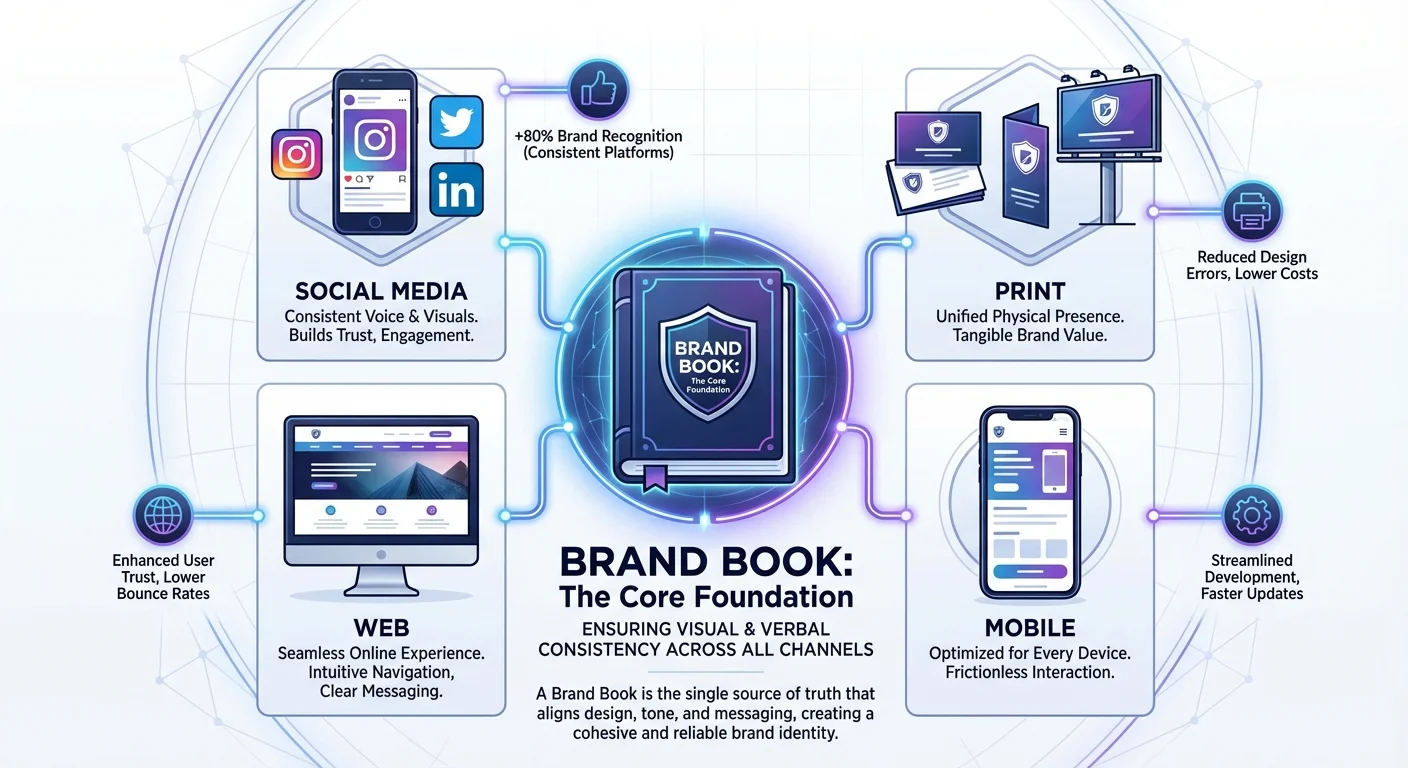
Verbal consistency is equally critical. Your brand voice is the “sound” of your company’s personality. Is your tone authoritative or playful? A comprehensive guide ensures that every piece of copy, from a 404-error page to a press release, sounds like it came from the same person. This is another reason Why a Brand Book is indispensable; it provides the linguistic guardrails that keep messaging aligned with core values.
To achieve this synchronization, organizations must implement a structured approach. When teams understand the importance of maintaining a unified brand identity across digital platforms, they are more likely to adhere to established rules. This alignment ensures that even as the company grows and hires new talent, the foundational essence of the brand remains recognizable.
Consider the following benefits of maintaining strict consistency through a dedicated manual:
- Reduced Decision Fatigue: Designers and writers don’t have to guess which hex codes or adjectives to use.
- Faster Onboarding: New employees or agencies can get up to speed in hours by reviewing the brand’s DNA.
- Enhanced Professionalism: A cohesive look across LinkedIn and physical packaging signals reliability.
- Cost Efficiency: You spend less time correcting off-brand materials and more time producing assets that convert.
The verbal component of your brand book should include specific “Do’s and Don’ts.” For instance, if your brand is eco-conscious, your book might mandate the use of “sustainable” while forbidding “disposable.” This granularity is Why a Brand Book becomes a living document that evolves with your market position while keeping your identity anchored. It prevents the brand from becoming a chameleon that changes colors based on the latest trend.
“A brand is not just a logo. it is a promise kept consistently over time. The brand book is the blueprint that ensures that promise is never broken, no matter how many people are working behind the scenes.”
Furthermore, visual consistency extends to how images are treated. Are your photos bright or moody? Without these specifications, your website might look like a stock photo gallery rather than a curated experience. This visual harmony is a primary driver for Why a Brand Book being requested by professional creative directors before they begin a project. It sets the boundaries within which creativity can flourish.
Implementing these guidelines requires discipline. It is not enough to create the document; it must be integrated into the daily workflow. Whether you are a solo entrepreneur or a lead designer, having a “source of truth” eliminates arguments over subjective tastes. The brand book becomes the final arbiter of what is “on-brand.” This clarity is Why a Brand Book is often cited as the most valuable asset in a company’s marketing toolkit.
In conclusion, ensuring that your visual and verbal signals are in harmony across every channel is the only way to build a resilient brand. By documenting these elements, you create a scalable system that protects your reputation. The investment in creating these guidelines pays off every time a customer recognizes your brand in a crowded marketplace and chooses you over a competitor.
Streamlining Internal Workflows and Onboarding Processes
Efficiency is the engine of any successful enterprise. When teams operate in silos, friction becomes inevitable. This is where the strategic implementation of a style guide becomes transformative. When asking Why a Brand Book is essential for internal operations, look at the volume of micro-decisions made daily by designers and writers. Without a guide, these decisions lead to endless back-and-forth messages.
A brand book acts as a definitive manual that eliminates guesswork. It provides a structured framework that allows employees to execute tasks with confidence. Instead of wondering which hex code to use for a call-to-action button, the answers are readily available. This clarity is the primary reason Why a Brand Book serves as a productivity tool that minimizes operational bottlenecks.

The onboarding process is a critical phase where a brand book proves its value. Bringing a new team member up to speed is a resource-heavy endeavor. By providing a clear roadmap, you reduce the “time-to-value” for every new hire. They can immerse themselves in the company culture immediately, ensuring contributions are aligned with the established identity.
Consider the impact on cross-departmental collaboration. When marketing, product development, and sales work from the same playbook, the output remains cohesive. This internal alignment prevents the “brand drift” that occurs as companies scale. If you are wondering Why a Brand Book is necessary for mid-sized companies, it is because it prevents the fragmentation of the brand message as more voices are added to the conversation.
Optimizing the Onboarding Journey
To understand the importance of Why a Brand Book for scaling teams, look at the specific steps where documentation saves time. A well-structured onboarding flow typically includes:
- Visual Identity Immersion: New hires learn logo usage and color palettes without needing a mentor for every small question.
- Voice and Tone Training: Writers understand how to speak to the audience, ensuring a consistent customer experience.
- Asset Accessibility: Providing links to approved templates within the brand book reduces time spent searching for files.
- Cultural Alignment: The brand book communicates the mission and values, helping employees feel connected to the purpose.
When these elements are centralized, the burden on senior staff is reduced. Managers no longer need to spend hours correcting basic stylistic errors. Instead, they can focus on high-level strategy and innovation. This shift in focus is a major reason Why a Brand Book is a foundational investment for long-term growth. It creates a self-sustaining ecosystem where quality control is built into the workflow.
“Consistency is not about stifling creativity. it is about providing the boundaries within which creativity can truly flourish and be effective.”
In fast-paced environments, speed is a competitive advantage. If a team has to reinvent the wheel for every campaign, they will fall behind. By standardizing the “how-to” of the brand, you empower your team to move faster. This is another perspective on Why a Brand Book is vital: it provides the “creative guardrails” that allow for rapid experimentation without risking brand integrity.
Furthermore, the brand book serves as a living document. As the company evolves, the book is updated, ensuring even tenured employees stay aligned with the current direction. It becomes the heartbeat of the organization’s communication. When leadership can point to a single document to resolve disputes over creative direction, the internal culture becomes more objective and less prone to subjective friction.
Ultimately, the question of Why a Brand Book is answered by the results: fewer revisions, faster approvals, and a more confident workforce. It bridges the gap between high-level strategy and day-to-day execution. By investing the time to document these processes early, a company builds a scalable foundation that can withstand the pressures of rapid expansion.
For those looking to refine internal processes, integrating these brand standards into a broader project management system is key. Whether you are managing a small agency or a large enterprise, the principles of clarity remain the same. A brand book is the first step toward a more professional, synchronized, and efficient internal culture that reflects the quality of the brand itself.
In conclusion, the internal benefits of a brand book are as significant as the external ones. It is the silent partner in every successful project, providing the structure necessary for a team to perform at its peak. By prioritizing this document, you are not just designing a brand; you are designing a more effective way to work.
Building Long-Term Trust and Recognition with Your Audience
Establishing a lasting connection with customers requires unwavering consistency. When considering Why a Brand Book is essential, the primary answer lies in its ability to foster trust. A customer who encounters the same visual language across every touchpoint feels a sense of security. Without these guidelines, your identity becomes fragmented, leading to confusion and a loss of credibility in a competitive market.
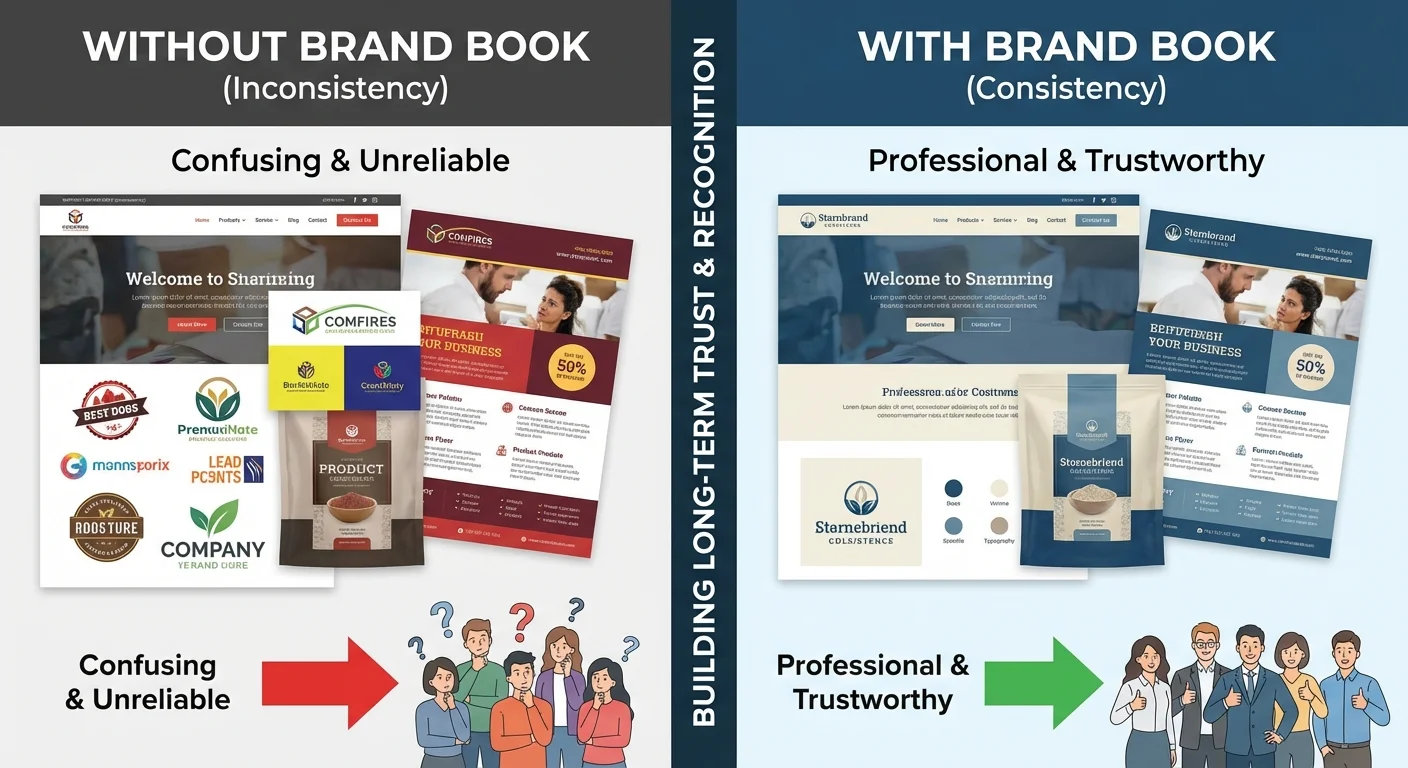
Consistency is the foundation of brand equity. If you are wondering Why a Brand Book matters for long-term growth, look at how global leaders maintain their image. They use documented standards to ensure every designer and writer stays on the same page. This internal alignment translates to an external perception of reliability. By following a Why a Brand Book strategy for sustainable growth, you ensure your audience recognizes your brand instantly.
To build this recognition effectively, your team should focus on several core pillars of identity management:
- Visual Cohesion: Using the exact color palettes and typography defined in your guidelines.
- Emotional Resonance: Maintaining a consistent brand voice that speaks to your target demographic’s values.
- Predictability: Delivering a familiar experience that reinforces customer loyalty over time.
Ultimately, the reason Why a Brand Book is indispensable is that it transforms a simple business into a recognizable entity. When you prioritize Why a Brand Book in your long-term strategy, you are investing in the most valuable asset you own: your reputation.
How a Strong Brand Identity Drives Scalable Marketing Results
Scaling a business requires a foundation of consistency that only a professional identity can provide. When your messaging remains uniform across every channel, you reduce friction in the customer journey. This is precisely Why a Brand Book becomes the most valuable asset for any marketing team looking to expand without losing its core essence.
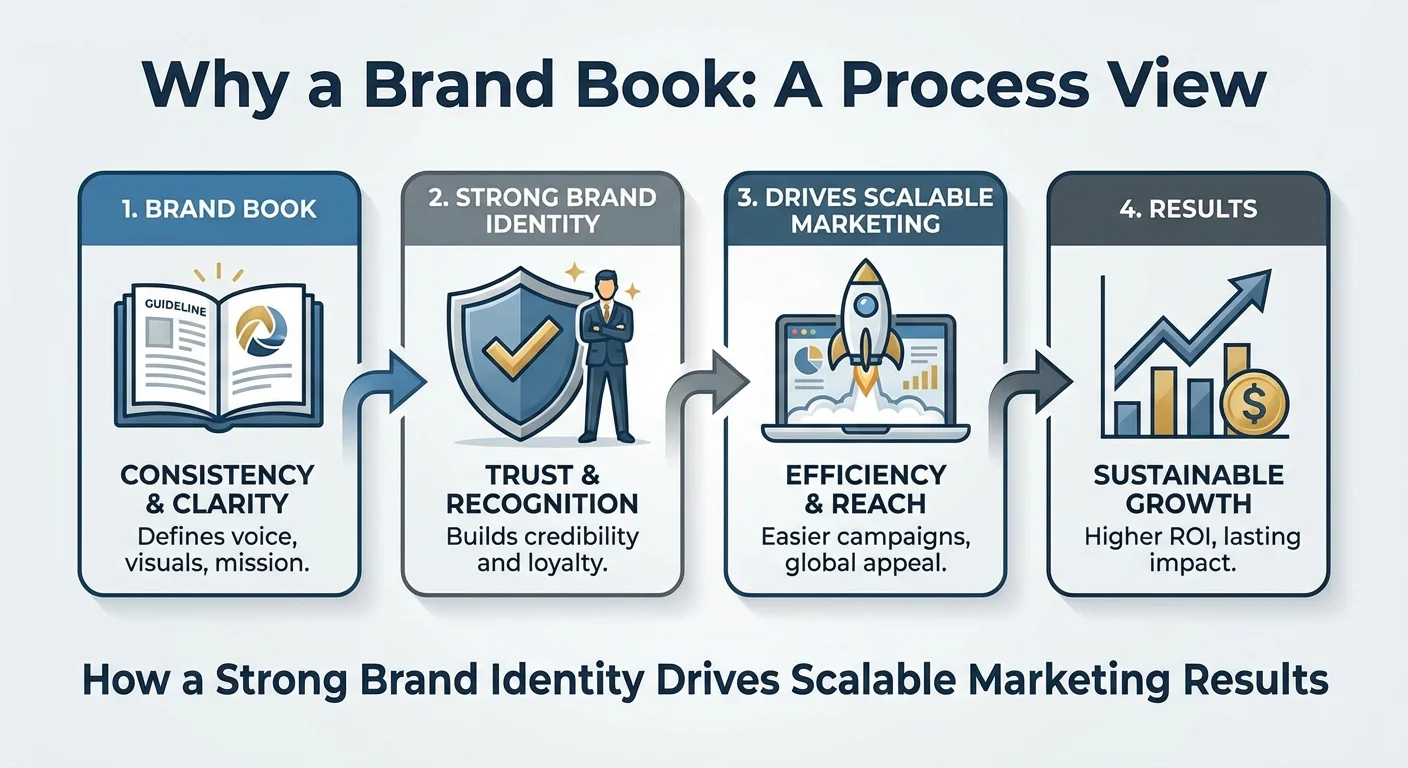
A centralized guide ensures that every freelancer or new hire understands the rules of engagement. Without this clarity, marketing efforts become fragmented, leading to a diluted presence. Understanding Why a Brand Book is essential for long-term business growth allows leadership to delegate creative tasks with confidence, knowing the output will always align with the established vision.
Consider the following benefits of implementing a standardized framework:
- Faster Campaign Launches: Teams don’t have to reinvent the wheel for every new social media post.
- Lower Customer Acquisition Costs: Recognition builds trust faster, meaning fewer touchpoints are needed to convert a lead.
- Improved Team Autonomy: Designers can work independently when they have clear guidelines on Why a Brand Book dictates specific palettes.
“Consistency is the bridge between a small startup and a global household name.”
Ultimately, the question of Why a Brand Book matters comes down to your bottom line. When your identity is scalable, your marketing results follow suit. By investing in Why a Brand Book today, you are protecting the future integrity of your company. It is the ultimate tool for maintaining quality control while your reach expands globally, ensuring that Why a Brand Book remains the cornerstone of your digital strategy.
Understanding why a brand book is essential for your company’s direction is the first step toward sustainable market leadership. This strategic document acts as a compass, ensuring every visual element and every message stays consistent across all platforms. By defining clear guidelines for your identity, you remove ambiguity, streamline internal workflows, and build a professional image that resonates with your audience. Consistency creates the trust needed for long-term customer loyalty and scalable growth.
Ultimately, a brand book is not a creative extra, but a fundamental investment in your success. It empowers your team to communicate a unified message that sets your business apart from the competition. Do not leave your reputation to chance. Define your unique standards for growth with clarity and focus today. Contact our consultants for a powerful brand book that delivers results.
FAQ
What is the primary reason why a brand book is essential for business scaling?
The primary reason why a brand book is essential for scaling is that it ensures consistency across all communication channels. By providing a single source of truth for design and tone, it allows teams to maintain a professional identity as the company grows.
How does a brand book improve internal team efficiency?
A brand book streamlines the creative process by eliminating guesswork for designers and marketers. This is why a brand book is a vital tool for onboarding new employees and external partners quickly without compromising your visual or verbal standards.
When should a company invest in creating a formal brand guide?
A company should invest in a formal guide as soon as they begin to expand their marketing efforts or hire multiple team members. Establishing these guidelines early prevents brand dilution and builds long-term trust with your target audience.
Service & Contact
Locatie: Marbella, Spain
Serviceareas: Marbella, Málaga, Costa del Sol, Andalusia, Spain, Remote, Worldwide
Services: Brand Book Creation and Design, Brand Strategy and Positioning Workshop, Visual Identity System (logo, colors, typography), Brand Voice and Messaging Guidelines, Usage Rules and Do’s and Don’ts, Template System for Marketing Assets, Social Media and Presentation Templates, Iconography and Illustration Guidelines, Photo Style and Art Direction, Brand Implementation Support (web and print), Brand Audit and Refresh
Hours: Mon-Fri 09:00-18:00
