

Effective Copywriting for Brochures requires a synergy between persuasive language and graphic design to drive conversions. Mastering this craft means writing concise copy that guides the reader’s eye through the layout while reinforcing the visual narrative. Unlike web copy, print demands spatial awareness where every word earns its place alongside imagery. Adopt a strategic approach that prioritizes clarity over clutter.
Brochure Copywriting: The secret formula
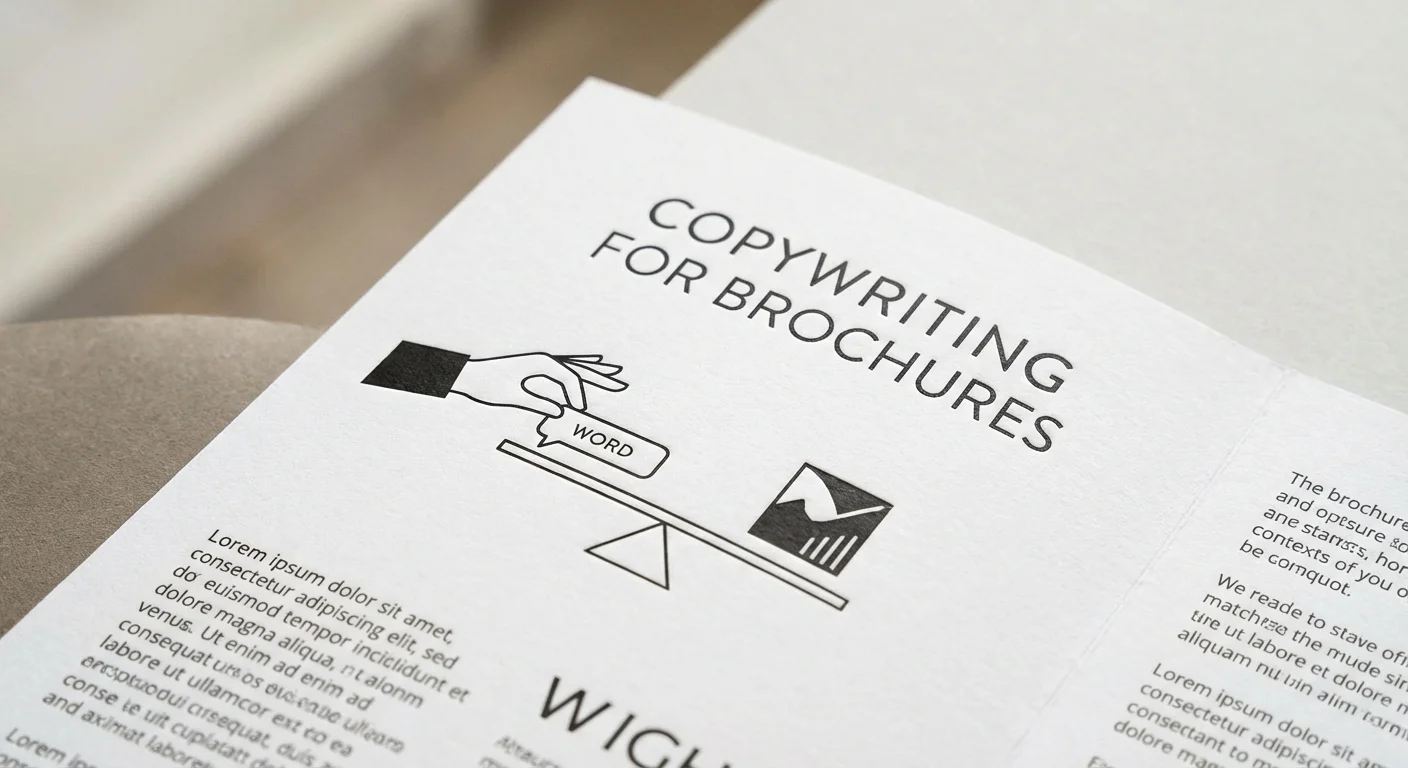
The secret formula for success is a balance of white space, powerful headlines, and clear visual hierarchy. Use short sentences to keep engagement high, and align your call to action with the physical fold lines. Ultimately, it comes down to impact and brevity. By understanding how text interacts with photos, you transform paper into a powerful sales tool that resonates directly with your audience.
The Fundamentals of Copywriting for Brochures
In the evolving landscape of digital marketing, the tactile nature of a physical brochure remains a powerhouse for brand communication. Mastering Copywriting for Brochures requires a balance between persuasive storytelling, technical precision, and strategic information architecture. A brochure is a tangible asset that potential clients often keep. Therefore, the foundational elements must be rock-solid to ensure your message resonates long after the initial encounter.
The first step is recognizing that you are designing an experience. A brochure is a multi-dimensional journey that unfolds as the reader turns pages. Your copy must be modular yet cohesive, guiding the eye from a captivating headline to a compelling call to action. Without a clear grasp of these fundamentals, even beautiful design will fail to convert interest into tangible business results.
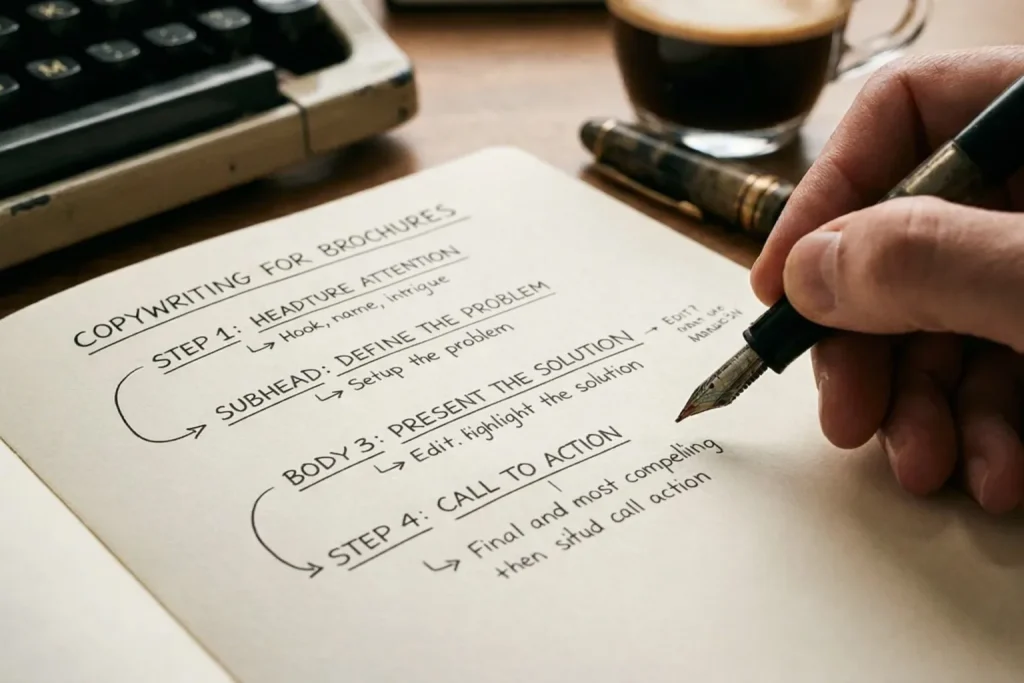
Effective Copywriting for Brochures starts with a deep dive into the psychology of your target audience. Ask yourself: What keeps them up at night? What specific problem does your service solve? By addressing these pain points directly, you establish immediate relevance. This empathetic approach separates mediocre marketing materials from high-converting sales tools that speak directly to the heart of the consumer’s needs.
One critical aspect is the “Headline-First” mentality. In Copywriting for Brochures, the front cover headline carries about 80% of the weight. If the headline doesn’t stop the reader, the rest of your prose will never be seen. It must promise a benefit, spark curiosity, or offer a solution so compelling that opening the brochure becomes an involuntary reflex. This is where your brand’s unique value proposition must shine.
To achieve results, writers often look for a proven Copywriting for Brochures framework for high conversion rates to structure thoughts. This involves organizing information in a way that mirrors the natural decision-making process. Start with the “Why,” move to the “How,” and conclude with the “What.” By following this flow, you reduce cognitive friction and make it easier for the reader to digest complex information without feeling overwhelmed by technical jargon.
When structuring content, consider these essential components that define successful Copywriting for Brochures:
- The Hook: A front-cover statement that demands attention and identifies the target reader immediately.
- The Problem/Solution Dynamic: Clearly articulating the challenge the reader faces and how your offering provides the remedy.
- Social Proof: Integrating testimonials or case studies that validate your claims through third-party verification.
- The Unique Selling Proposition (USP): A concise explanation of what makes your brand different and better than competition.
- The Call to Action (CTA): A clear instruction on what the reader should do next, whether visiting a website or making a call.
Clarity is the ultimate goal. In Copywriting for Brochures, every word must earn its place. This requires a ruthless editing process where fluff is eliminated in favor of punchy, action-oriented language. Use active verbs to maintain momentum. Remember, the reader’s time is precious; if they work too hard to understand your message, you have lost them to a competitor who communicates more effectively.
Furthermore, the integration of copy and design is a pillar that cannot be ignored. Work closely with designers to ensure text blocks are balanced by white space. Too much text can be intimidating, while too little can leave the reader uninformed. Professional Copywriting for Brochures involves planning for visual breaks, using bullet points, subheaders, and sidebars to break up information into “snackable” pieces that are easy to scan.
“The secret to great brochure copy isn’t just about what you say, but how you lead the reader through a logical sequence of emotional triggers and rational justifications.”
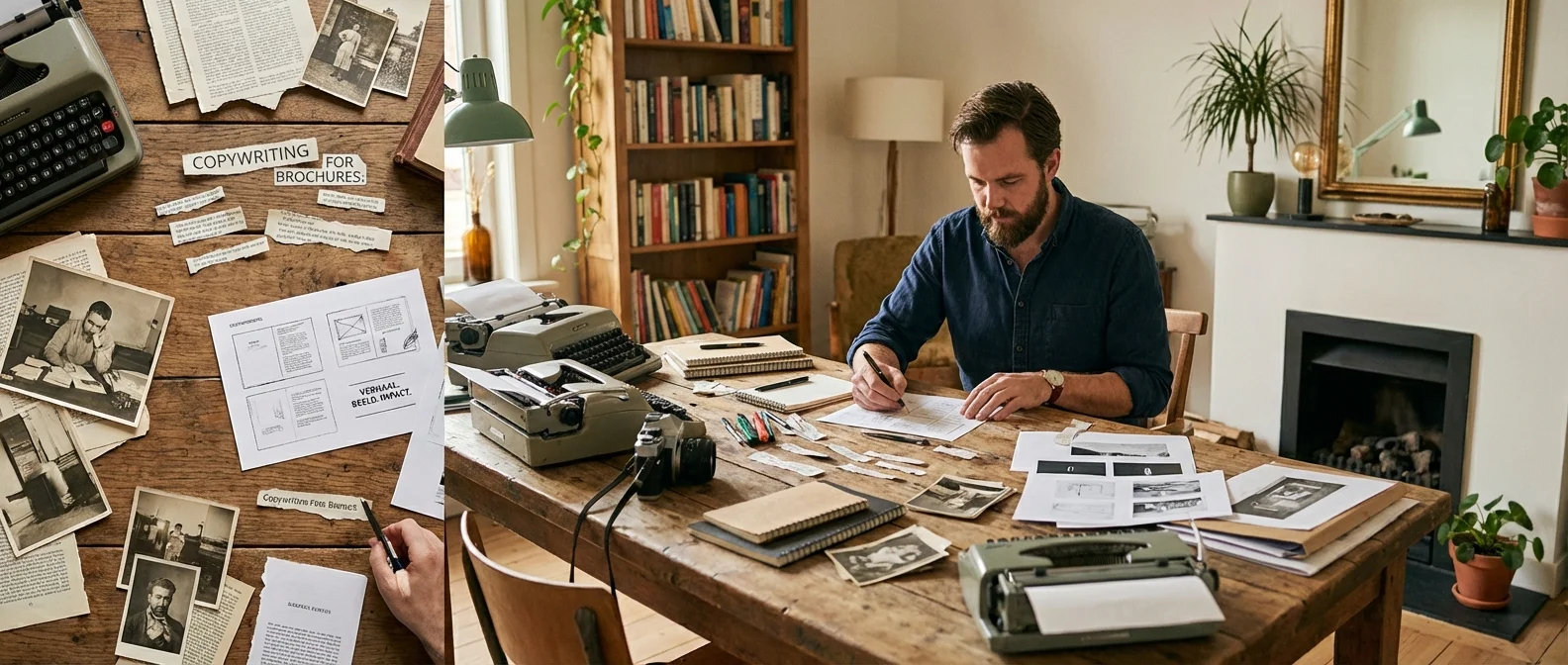
Another fundamental element is the tone of voice. Your Copywriting for Brochures must reflect the personality of the brand consistently. Whether you are an industry leader or a disruptive innovator, the language you choose must align with audience expectations. Inconsistency in tone can create a sense of distrust, making the reader question the professionalism of the organization.
In addition to tone, the “Feature vs. Benefit” rule is paramount. Many businesses list technical specifications without explaining why they matter. In high-quality Copywriting for Brochures, every feature mentioned should be tied to a direct benefit. For example, instead of saying a vacuum has a “2000-watt motor,” say “Powerful 2000-watt suction that removes deep-seated allergens in a single pass.” This connects technicality to a real-world improvement.
Let’s look at a structured approach to the internal pages:
- Introduction: Set the stage by acknowledging the reader’s current situation or industry trends.
- The Core Offering: Detail your primary products or services with a focus on unique advantages.
- Process/Methodology: Explain how you work, which helps to demystify the service and lower the barrier to entry.
- Proof Points: Use data, awards, or client logos to reinforce your authority in the field.
- Final Persuasion: A concluding paragraph that summarizes the value and creates a sense of urgency.
Technical accuracy is a cornerstone of Copywriting for Brochures. Unlike digital content, a printed brochure is permanent once it hits the press. This means fact-checking, proofreading, and verifying contact information are non-negotiable steps. A single typo in a phone number or a misspelled product name can ruin the credibility of an otherwise perfect marketing campaign and result in financial loss.
Moreover, the concept of “Micro-copy” plays a significant role. These are small bits of text, captions under photos, labels on diagrams, or text on a “Contact Us” button. In Copywriting for Brochures, micro-copy is an opportunity to add personality or provide crucial context that helps the reader navigate the document. These small details often push a prospect from “just looking” to “ready to buy.”
Finally, consider the physical medium. The type of paper, the fold (Z-fold, tri-fold, gatefold), and the finish will influence how copy is perceived. A luxury brand might use minimalist Copywriting for Brochures on heavy cardstock to convey exclusivity, while a fast-moving brand might use vibrant colors and bold text on a standard gloss. The copy must work in harmony with these physical attributes to create a unified brand message.
By mastering these fundamentals, you set the stage for a brochure that actively works as a silent salesperson. It requires patience, strategic thinking, and a commitment to understanding human persuasion. As we move into advanced strategies, keep these core principles of Copywriting for Brochures at the forefront of your creative process to ensure every word contributes to your ultimate business objectives.
Strategies for Writing Copy That Complements Visual Design
Effective visual communication requires a marriage between aesthetics and text. When engaging in Copywriting for Brochures, Which Brochure Size Fits Your Project? The layout and siza dictates the flow of information. Writers must respect the white space provided by designers to ensure the final product remains readable. If text is too dense, the visual impact is lost; if it is too sparse, the message lacks depth.
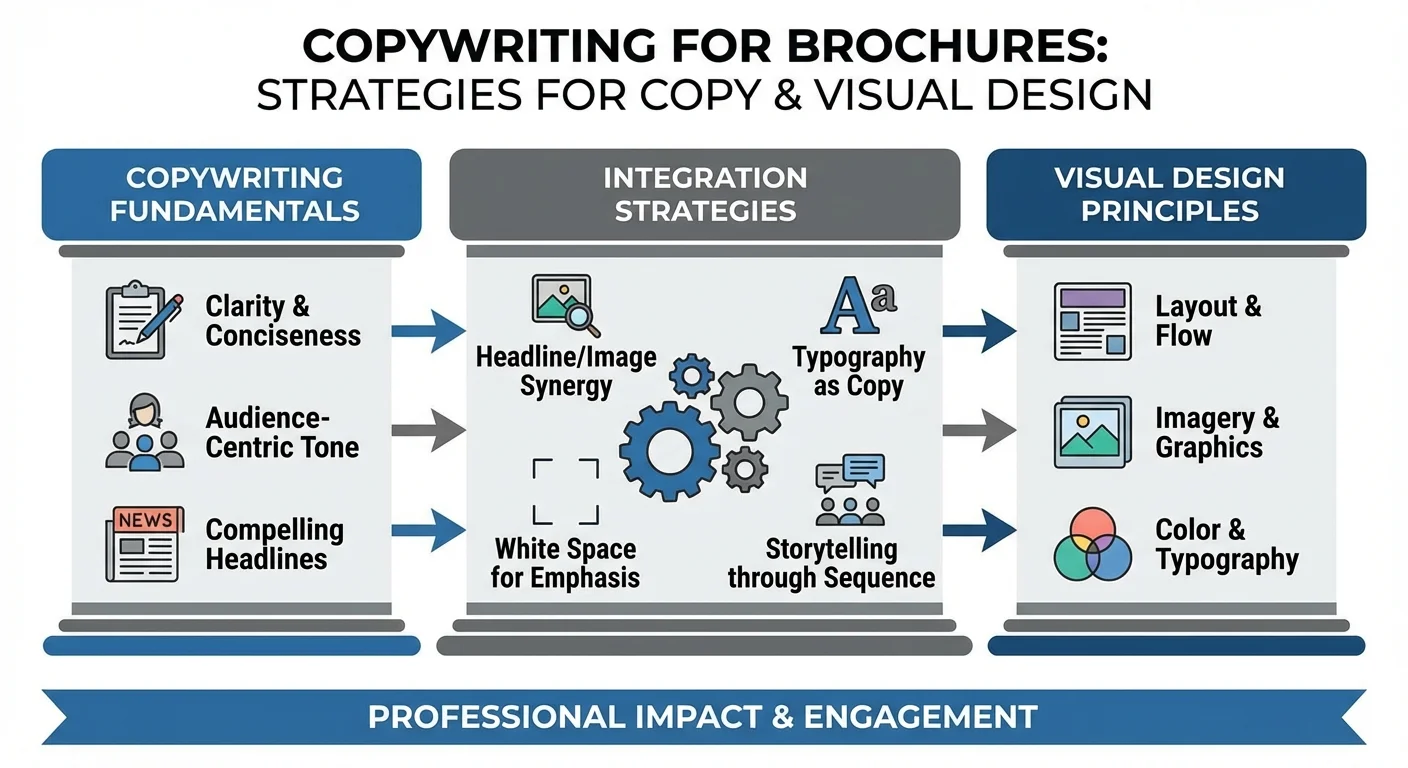
To achieve this balance, consider these essential strategies for Copywriting for Brochures:
- Hierarchy of Information: Use bold headlines to guide the eye and short paragraphs to maintain interest.
- Visual Anchoring: Ensure your copy refers to specific design elements or images nearby to create a cohesive narrative.
- Micro-copy: Utilize captions and callouts to break up large blocks of text, which is a vital part of Copywriting for Brochures..
“The best design cannot rescue poor messaging, and the best copy cannot shine in a cluttered layout. They must evolve together.”
When starting your next project involving Copywriting for Brochures, collaborate with your designer early. Discuss the placement of headers and the length of bullet points before finalizing the draft. This proactive alignment prevents awkward text wraps and ensures that the Copywriting for Brochures feels like an integrated part of the artwork. The goal is to create a document where the reader perceives the message and design as a single, unified voice.
Optimizing Your Layout for Maximum Reader Engagement
Visual presentation is as critical as the words on the page. When executing professional Copywriting for Brochures, ensure the design guides the reader’s eye naturally through the narrative. A cluttered layout will distract from your message, regardless of how persuasive your prose might be. By balancing white space with high-impact headers, you create a rhythmic reading experience that encourages the prospect to keep turning pages.
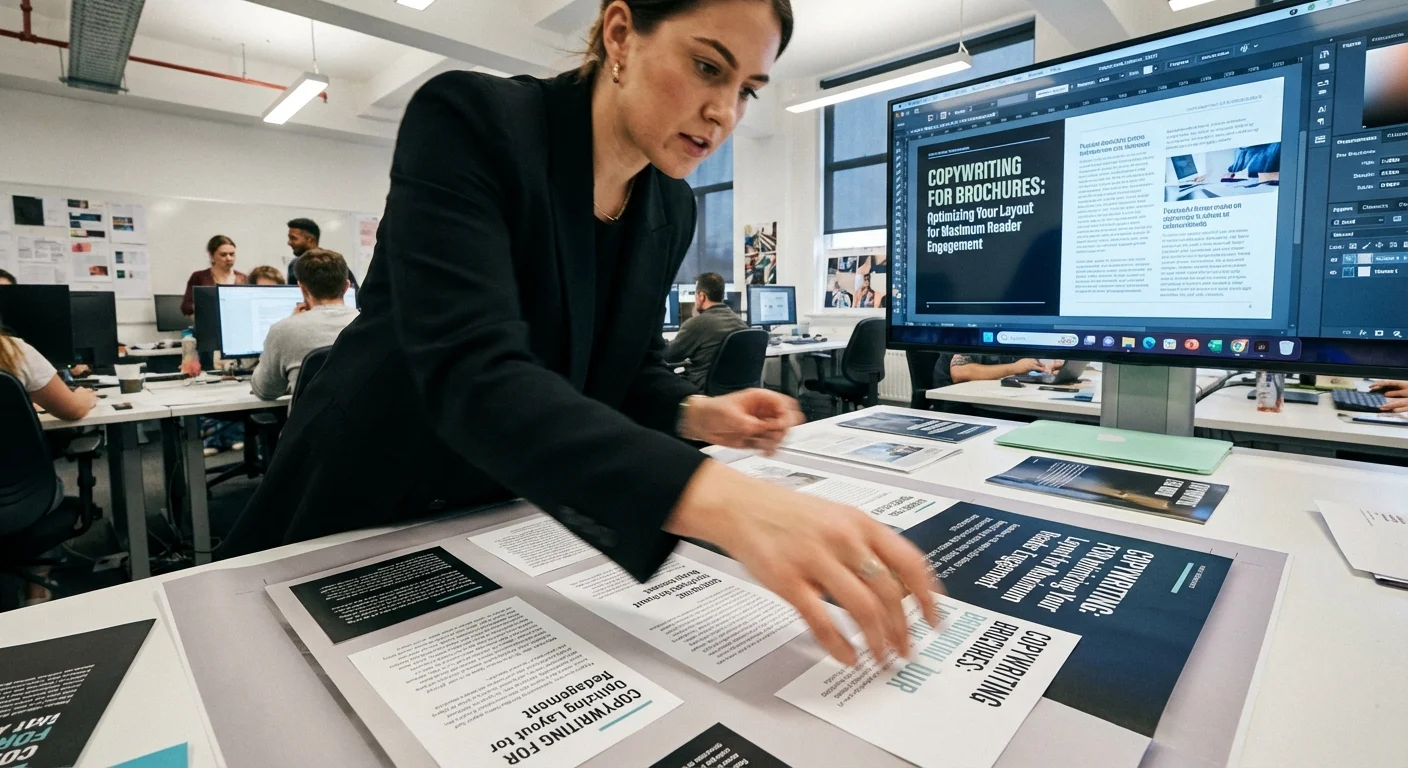
Effective Copywriting for Brochures relies on a clear information hierarchy. Your most compelling benefits should be placed in prominent positions, such as top-left corners or within bold call-out boxes. This structural approach ensures that even “skimmers” capture the essence of your value proposition. The goal is to make the consumption of information as effortless as possible for your target audience.
Key Elements for Structural Success
- Utilize bullet points to break up dense technical specifications.
- Incorporate high-quality imagery that reflects the tone of your Copywriting for Brochures.
- Use contrasting colors for your Call to Action (CTA) to drive conversions.
- Maintain consistent font styles to establish brand authority.
“The layout is the silent ambassador of your brand. it speaks through structure before the reader even processes the first sentence.”
Mastering copywriting for brochures requires a balance between compelling language and strategic layout. By prioritizing the synergy between text and imagery, you ensure your message resonates instantly. Remember that clarity always beats cleverness; your words should guide the reader through the visual journey without overwhelming the design. Effective copywriting for brochures is about creating a cohesive narrative where every headline and caption serves a specific purpose in the conversion funnel.
As you refine your approach, focus on brevity and impact to keep your audience engaged from the front cover to the final page. High-quality visuals deserve equally high-quality prose to drive results. Are you ready to transform your marketing materials into powerful sales tools that capture attention and inspire action? Contact our expert team today to elevate your brand’s storytelling and start crafting high-converting brochures that truly stand out in a crowded marketplace.
FAQ
What is the most important rule when it comes to copywriting for brochures?
The most important rule is to ensure your text complements the visual layout rather than competing with it. Effective copywriting for brochures uses concise headlines and bullet points to guide the reader’s eye through the design seamlessly.
How do you balance text and images in a professional brochure?
You balance them by using white space effectively and keeping your copy brief to let the photography breathe. Professional copywriting for brochures focuses on high-impact messaging that explains the visuals without overcrowding the page.
Why should you use a call-to-action in your brochure copy?
A call-to-action is essential because it tells the reader exactly what step to take after viewing your visuals. Without a clear directive, even the most beautiful brochure will fail to convert interest into measurable results.
Service & Contact
Location: Marbella, Spain
Serviceareas: Marbella, Málaga, Costa del Sol, Andalusia, Spain, Remote, Worldwide
Services: Brochure Copywriting and Messaging Strategy, Headline and CTA Copy Development, Benefit Led Product or Service Descriptions, Content Structuring for Page Flow, Brand Voice and Tone of Voice Alignment, Proofreading and Editing, Bilingual or Multilingual Brochure Copy, Copy to Layout Collaboration (designer handoff), SEO Friendly PDF Copy for Digital Brochures, Case Study and Testimonial Writing
Opening hours: Mon-Fri 09:00-18:00
