

The marketing impact of large construction site boards is a powerful way to build local authority and generate leads. These high-visibility displays turn construction sites into advertising hubs, maximizing exposure to nearby residents and passing traffic.
“Strategic signage placement ensures a lasting marketing impact that digital ads simply can’t match in a real-world, physical environment.”
To dominate the local market, developers should amplify the marketing impact of outdoor advertising with bold typography and clear calls-to-action. By integrating QR codes and project renders, that marketing impact flows directly into your digital sales funnel.
- High visibility delivers 24/7 brand awareness.
- Professional boards strengthen trust within the local community.
- Strategic design increases the overall marketing impact of every project.
Understanding the Marketing Impact of Construction Site Signage
The construction industry is often viewed through the lens of heavy machinery, architectural blueprints, and raw materials. However, from a strategic branding perspective, a construction site is much more than a work in progress. it is a high-traffic advertising canvas. Understanding the Marketing Impact of these physical spaces is essential for developers, contractors, and marketing agencies alike. When a project is centrally located in an urban environment, thousands of pedestrians and motorists pass by daily, creating a unique opportunity for passive yet powerful brand exposure.
Construction site signage serves as a silent ambassador for your company. It communicates professional standards, project timelines, and brand identity long before the ribbon-cutting ceremony. The Marketing Impact of a well-designed hoarding or fence wrap cannot be overstated, as it transforms a dusty perimeter into a storytelling platform. By utilizing high-quality visuals and clear messaging, firms can build anticipation and trust within the local community, ensuring that the project is welcomed rather than viewed as a mere disruption.
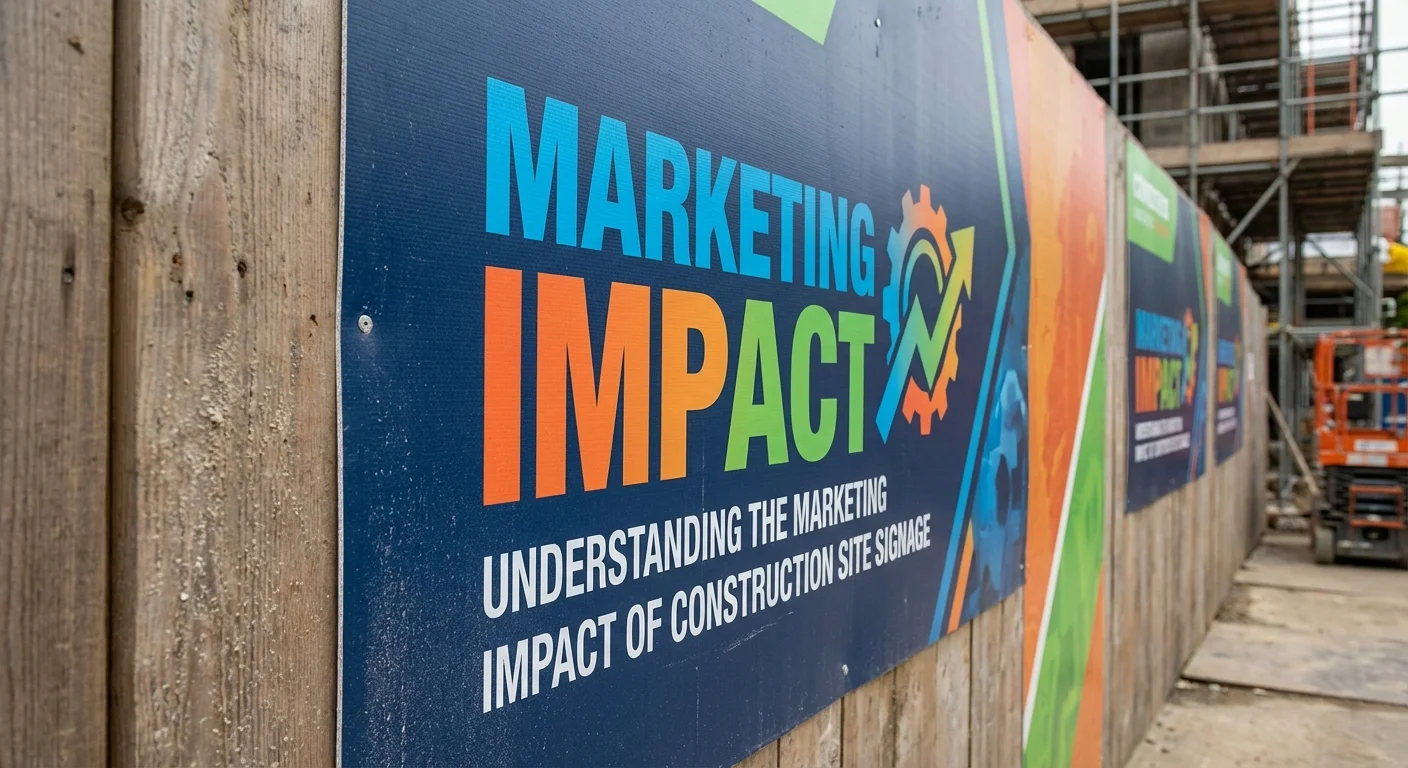
To maximize the Marketing Impact, one must look beyond simple logos. Effective signage incorporates psychological triggers, such as color theory and spatial awareness, to capture attention in a cluttered urban landscape. For instance, using bold typography and high-contrast imagery helps in maintaining legibility from a distance. This is particularly important for maximizing the Marketing Impact of outdoor construction branding, as the viewer often has only a few seconds to absorb the information while moving past the site.
There are several key components that contribute to the overall effectiveness of site signage. When these elements align, the Marketing Impact increases exponentially, leading to higher brand recall and potential lead generation. Consider the following factors when planning your site layout:
- Visual Hierarchy: Ensuring the most important information, such as the project name or contact details, is the most prominent.
- Material Quality: Using weather-resistant materials like Dibond or high-grade PVC to maintain a premium look throughout the project duration.
- Compliance and Safety: Integrating mandatory safety warnings with brand elements to maintain a cohesive aesthetic.
- Call to Action: Including QR codes or website URLs to bridge the gap between physical signage and digital engagement.
Strategic placement is another pillar of a successful campaign. A sign tucked away in a low-visibility corner will have a negligible Marketing Impact compared to one placed at eye level near a busy intersection or a public transport hub. It is about identifying the “hotspots” around the perimeter where foot traffic naturally slows down, such as near traffic lights or pedestrian crossings. This deliberate positioning ensures that your message is seen by the right demographic at the right time.
“The perimeter of a construction site is the first chapter of the building’s story. If you fail to engage the public here, you lose the chance to build a community around your brand before the doors even open.”
Furthermore, the integration of digital elements into physical signage is a growing trend. By linking physical banners to a definitive guide to make a daily more productive working flow or a project landing page, companies can track the effectiveness of their outdoor media. This data-driven approach allows for a more nuanced understanding of how physical assets contribute to the broader Marketing Impact of a multi-channel campaign. It turns a static fence into a dynamic entry point for a digital sales funnel.
Consistency is the final piece of the puzzle. The Marketing Impact is diluted if the signage at the site does not match the company’s online presence or corporate stationery. Every touchpoint must reinforce the same brand values. Whether it is the choice of imagery or the tone of the copy, uniformity breeds familiarity. When people see the same high-quality branding across multiple sites, they begin to associate the firm with reliability and large-scale success, which is the ultimate goal of any localized marketing effort.
In conclusion, the Marketing Impact of construction site signage is a multifaceted phenomenon. It requires a blend of graphic design, urban psychology, and strategic placement. By treating the construction fence as a premium billboard, companies can generate significant ROI and establish a dominant presence in the local market. As we delve deeper into the technical aspects of signage in the following sections, keep in mind that the primary goal is always to turn a temporary obstacle into a permanent brand impression.
Maximizing Brand Visibility in High-Traffic Development Areas
In the rapidly evolving landscape of urban expansion, high-traffic development areas represent a goldmine for businesses seeking to establish a dominant presence. These zones, often characterized by massive construction projects, new residential hubs, or emerging commercial districts, attract a constant flow of potential customers. To truly capitalize on these opportunities, companies must look beyond traditional advertising and focus on the long-term Marketing Impact of their physical and digital presence. When a brand integrates itself into the fabric of a growing community, it builds a foundation of trust and recognition that is difficult for competitors to displace later on.
The strategic placement of signage, experiential pop-ups, and localized digital targeting ensures that your brand remains top-of-mind. However, visibility is not just about being seen. it is about being remembered. High-traffic areas offer a unique psychological advantage: frequency of exposure. As residents and commuters pass by a development site daily, the repeated interaction with a brand’s visual identity strengthens its Marketing Impact. This consistent reinforcement helps transition a brand from a mere name to a familiar neighbor in the eyes of the consumer.
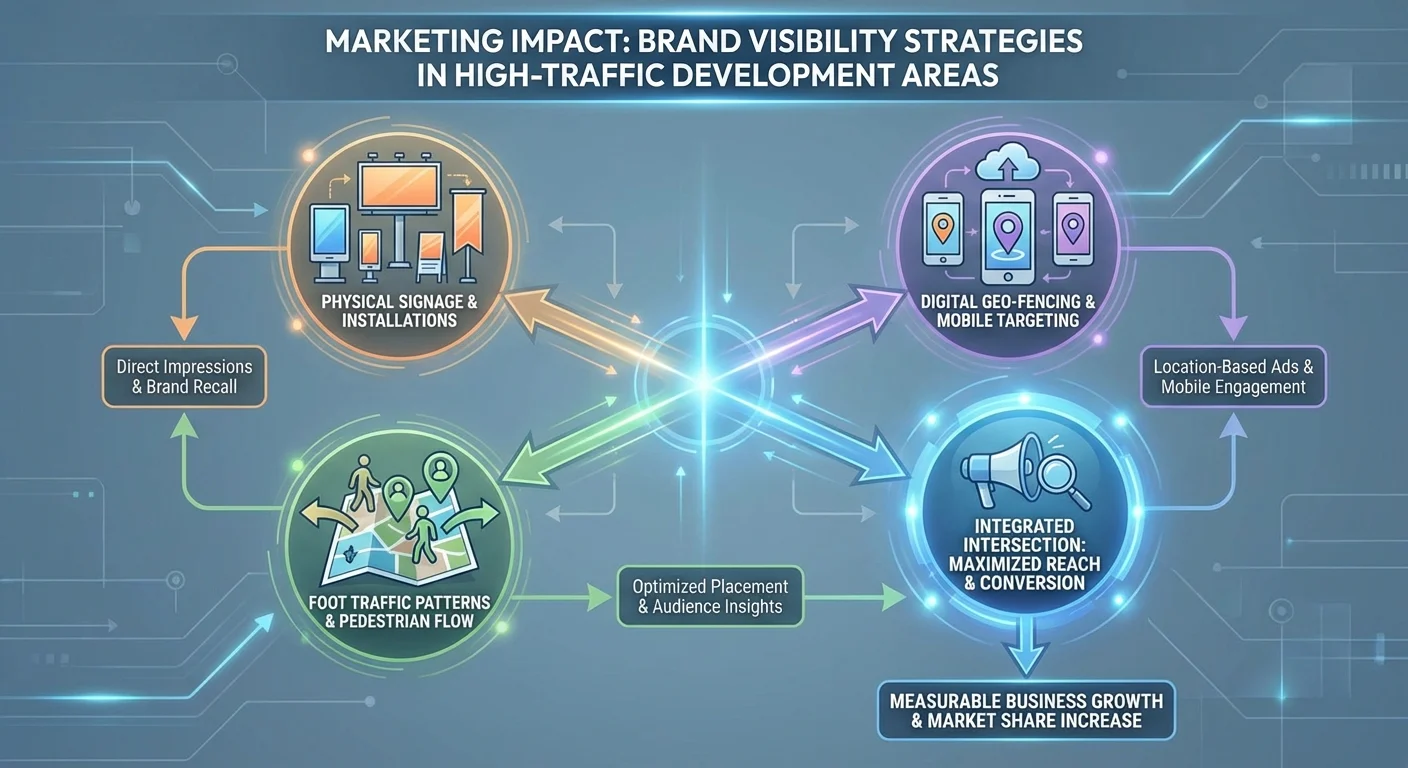
To achieve the best results, developers and marketers must collaborate to ensure that brand assets are not just visible but also aesthetically pleasing and functional. For instance, using high-quality hoarding graphics around a construction site can turn an eyesore into a gallery of brand storytelling. This proactive approach significantly boosts the overall Marketing Impact by associating the brand with progress and community improvement. It is essential to understand that in these high-growth zones, the environment is constantly changing, requiring a flexible and adaptive visibility strategy.
Key Strategies for Dominating High-Growth Zones
Success in high-traffic development areas requires a multi-faceted approach. It is not enough to simply put up a billboard. you must engage with the audience on multiple levels. Consider the following tactics to enhance your visibility:
- Hyper-Local SEO and Geo-Fencing: Use digital boundaries to serve ads to people specifically within the development zone, ensuring your online presence matches your physical footprint.
- Interactive Installations: Create touchpoints that allow passersby to interact with your brand, such as QR codes leading to exclusive content or augmented reality experiences.
- Community Sponsorships: Align your brand with local events or infrastructure improvements to build a positive reputation from the ground up.
- Sustainable Signage: Use eco-friendly materials for your physical displays to appeal to the modern, environmentally-conscious consumer.
By implementing these strategies, businesses can ensure that their Marketing Impact is both deep and wide. The goal is to create a seamless transition between the physical world and the digital space. For more insights on optimizing your professional output and creative processes, you might find it useful to read about the definitive guide to make a daily more productive working flow, which can help teams manage complex marketing campaigns more effectively.
“The most successful brands in emerging districts are those that treat the development phase as a conversation with the future community, rather than just a construction period.”
When analyzing the long-term Marketing Impact strategies for urban development, one must consider the lifecycle of the area. In the early stages, visibility is about awareness. As the area matures, the focus shifts to loyalty and retention. This evolution requires a shift in messaging. Early-stage Marketing Impact is driven by bold visuals and “coming soon” teasers, whereas late-stage impact is driven by utility and service-oriented communication. Brands that fail to adapt their visibility tactics as the neighborhood grows risk becoming part of the background noise.
Furthermore, the data collected from these high-traffic areas can provide invaluable insights. By tracking foot traffic patterns and engagement rates with physical displays, marketers can refine their approach in real-time. This data-driven mindset ensures that every dollar spent on visibility contributes directly to a measurable Marketing Impact. It allows for a more surgical application of resources, focusing on the specific corners and corridors where the highest concentration of the target demographic resides or works.
In conclusion, maximizing visibility in high-traffic development areas is a marathon, not a sprint. It requires a blend of creative design, strategic placement, and digital integration. The Marketing Impact of these efforts is felt long after the construction cranes have disappeared. By establishing a strong, positive presence early on, a brand secures its place in the daily lives of the new community, ensuring sustained growth and a high return on investment for years to come. Whether through massive murals or subtle digital prompts, the key is to remain relevant, visible, and consistently engaged with the evolving urban landscape.
Turning Construction Sites into Professional Advertising Hubs
The transformation of a chaotic construction zone into a streamlined, high-visibility marketing asset is one of the most underutilized strategies in modern urban development. Traditionally, construction sites were viewed as temporary inconveniences—eyesores characterized by dust, noise, and scaffolding. However, forward-thinking developers are now leveraging these spaces to maximize their Marketing Impact, turning perimeter fences and hoarding panels into massive canvases for brand storytelling. By treating a site as a professional advertising hub, companies can communicate their vision long before the first brick is even laid.
When we analyze the physical footprint of a construction project, the sheer scale of available surface area is staggering. A standard city block undergoing renovation offers hundreds of linear meters of fencing. If left blank, this space is a missed opportunity. If utilized correctly, it becomes a 24/7 billboard that reaches thousands of pedestrians and commuters daily. This shift in perspective is essential for brands looking to establish a dominant local presence. The Marketing Impact of a well-executed site wrap goes beyond simple brand recognition. it builds anticipation and trust within the community.
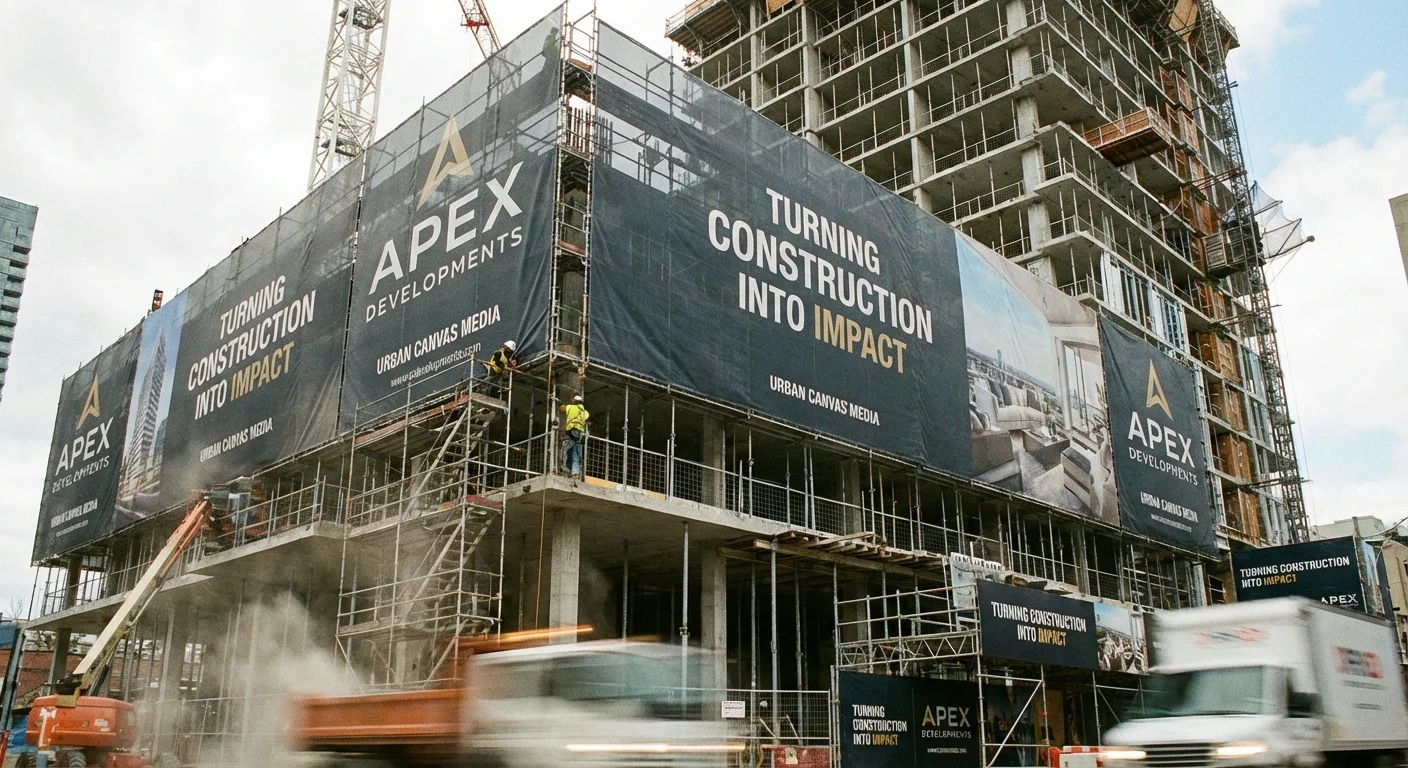
To achieve a professional aesthetic, developers must move away from generic “Work in Progress” signs and embrace high-fidelity graphics. This involves integrating high-resolution architectural renders, lifestyle imagery, and clear calls to action. The goal is to create an immersive experience that allows passersby to visualize the finished product. This level of detail significantly enhances the overall Marketing Impact, as it positions the developer as a meticulous and professional entity that cares about the visual fabric of the neighborhood.
Implementing a professional advertising hub requires a strategic approach to design and materials. Consider the following elements to ensure your site stands out:
- High-Durability Mesh Banners: Use weather-resistant materials that maintain color vibrancy despite exposure to wind, rain, and UV rays.
- Architectural Previews: Display 3D renders of the interior and exterior to spark curiosity and drive pre-sales or leasing inquiries.
- QR Code Integration: Bridge the gap between physical and digital by allowing users to scan the hoarding for instant access to project updates or virtual tours.
- Consistent Branding: Ensure that typography, color palettes, and logos align perfectly with your corporate identity to reinforce brand recall.
- Safety and Compliance: Integrate mandatory safety signage into the creative design so it doesn’t detract from the professional look.
One of the most effective ways to measure the Marketing Impact van bouwplaats reclame strategieën is to track the influx of digital engagement during the construction phase. By directing traffic from the physical site to a dedicated landing page, developers can capture leads early in the project lifecycle. This proactive lead generation is a direct result of treating the construction site as a premium advertising channel rather than a mere utility area. It creates a narrative of progress and success that resonates with potential investors and tenants alike.
“A construction site is not just a place where something is being built. it is a stage where a brand’s future is being performed. The visual quality of that stage dictates the audience’s perception of the final performance.”
Furthermore, the psychological effect of a clean, branded construction site cannot be overstated. A professional advertising hub signals to the public that the project is well-managed and financially stable. This perception reduces the friction often associated with urban development. When the Marketing Impact is positive, neighbors are more likely to tolerate the temporary disruptions of construction, viewing the project as a valuable addition to their environment rather than a nuisance. This community goodwill is a valuable byproduct of professional site branding.
For those looking to refine their creative approach to large-scale visual projects, it is helpful to look at how top-tier agencies manage complex design tasks. You can learn more about high-level creative processes by exploring the highly creative UI/UX workflow from a Silicon Valley perspective, which emphasizes the importance of user experience—even in a physical, outdoor setting. Applying these digital design principles to physical hoarding can elevate the Marketing Impact to new heights.
As urban density increases, the competition for attention becomes fiercer. Static billboards are often ignored, but a construction site is a changing, evolving landmark. By updating the graphics at different stages of the build—from excavation to topping out—you keep the message fresh and the audience engaged. This dynamic approach ensures a sustained Marketing Impact throughout the duration of the project. It turns a static fence into a living timeline of growth and development.
In conclusion, turning a construction site into a professional advertising hub is a strategic investment that pays dividends in brand equity and lead generation. By focusing on high-quality visuals, strategic messaging, and community engagement, developers can ensure that their project makes a lasting impression long before the doors open. The Marketing Impact of this transformation is a key differentiator in a crowded real estate market, proving that every square inch of a project holds potential for growth.
Key Design Elements for Effective Large-Scale Site Boards
When developing large-scale site boards for construction projects, urban developments, or massive retail expansions, the architectural design of the board itself is just as critical as the message it carries. These physical touchpoints serve as the primary interface between a brand and the public during a transition phase. To maximize the Marketing Impact, designers must prioritize visual hierarchy and legibility from significant distances. A site board is not merely a fence. it is a high-traffic billboard that communicates stability, progress, and brand identity simultaneously.
The first element to consider is the use of high-contrast typography. In the realm of outdoor signage, thin scripts and decorative fonts often fail. Instead, bold sans-serif typefaces ensure that the Marketing Impact remains strong even when viewed from a moving vehicle. The scale of the lettering must be proportional to the speed of passing traffic. For instance, a site board located along a highway requires much larger focal points than one situated in a pedestrian-heavy city center. Every design choice should lead back to the core objective of capturing attention within seconds.
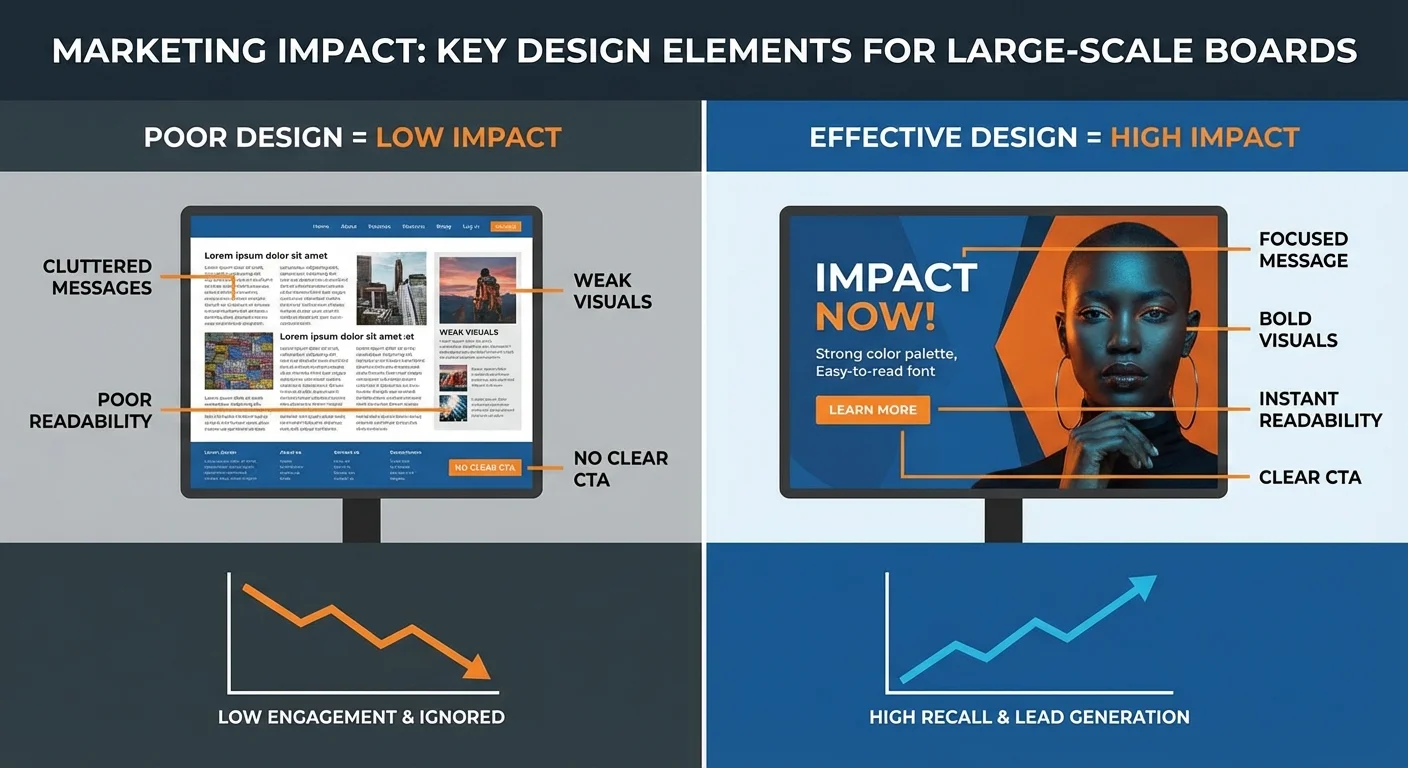
Color theory plays a pivotal role in how these boards are perceived. While it is tempting to use bright, neon colors to grab attention, a professional Marketing Impact is often better achieved through a palette that reflects the final project’s aesthetics. If the site board is for a luxury residential complex, muted tones, gold accents, and high-quality renders provide a sense of prestige. Conversely, infrastructure projects might benefit from high-visibility yellows and blues that signal safety and public utility. Consistency in color ensures that the brand remains recognizable across various media channels.
To ensure your design process is as efficient as possible, it is helpful to look at established professional systems. You can explore the highly creative UI UX workflow from a Silicon Valley perspective to understand how digital design principles can be translated into physical environmental graphics. Applying a structured workflow ensures that no technical detail, such as bleed margins or resolution requirements for large-format printing, is overlooked during the creative phase.
Another essential design element is the integration of high-resolution 3D visualizations. People are naturally drawn to imagery that depicts the future state of a location. By showcasing realistic renders of the completed building, developers can generate excitement and pre-sales interest. This visual storytelling is a cornerstone of a high-level Marketing Impact strategie voor grootschalige projecten. When the public can see the value being added to their neighborhood, the site board transforms from a nuisance into a promise of improvement.
Consider the following checklist for optimizing your site board design:
- Visual Hierarchy: Ensure the most important information (Project Name, Website, Logo) is the most prominent.
- Material Quality: Use weather-resistant substrates like Dibond or heavy-duty PVC to prevent warping and fading.
- Contact Information: Include clear calls to action, such as QR codes or short URLs, to track the Marketing Impact of the physical installation.
- Lighting: Incorporate solar-powered LED lighting to ensure the board works for the brand 24/7.
- Safety Compliance: Ensure that the design does not obscure traffic signals or create hazards for pedestrians.
The placement of logos is a subtle yet powerful tool. A common mistake is placing the developer’s logo in a corner where it might be obscured by temporary fencing or street furniture. For maximum Marketing Impact, the branding should be integrated into the narrative of the board. Using a “grid system” allows for a modular design that can be adapted to different sections of a long perimeter without losing the cohesive look. This modularity is particularly useful for large-scale sites where the hoarding might stretch for hundreds of meters.
“A well-designed site board does more than hide a construction site. it builds a bridge between the current reality and the future vision of the brand, creating a lasting Marketing Impact on the community.”
Furthermore, the inclusion of “human elements” in the design can significantly soften the industrial feel of a construction site. Including photos of people interacting with the future space—whether it is a park, a shopping mall, or an office lobby—helps the audience visualize themselves in that environment. This emotional connection is a key driver of Marketing Impact, as it moves the conversation from “what is being built” to “how this will improve my life.”
Finally, durability cannot be overstated. A weathered, peeling, or graffitied site board sends a message of neglect. Designers must work closely with printers to select UV-resistant inks and anti-graffiti laminates. When a board remains pristine throughout the duration of a project, it reinforces the brand’s commitment to quality. This attention to detail ensures that the Marketing Impact remains positive from the day the first panel is installed until the day the project is unveiled to the public. By treating the site board as a premium advertising asset rather than a temporary necessity, companies can achieve a much higher return on their physical branding investment.
Cost-Effective Local Reach Compared to Digital Advertising
In an era where digital ad auctions are becoming increasingly expensive, businesses are rediscovering the power of localized physical presence. While online platforms offer global scale, the cost-per-acquisition for local customers often skyrockets due to high competition. By shifting focus toward community-centric strategies, brands can achieve a significant Marketing Impact without the recurring costs of pay-per-click models. Localized efforts build a tangible foundation that digital algorithms simply cannot replicate.
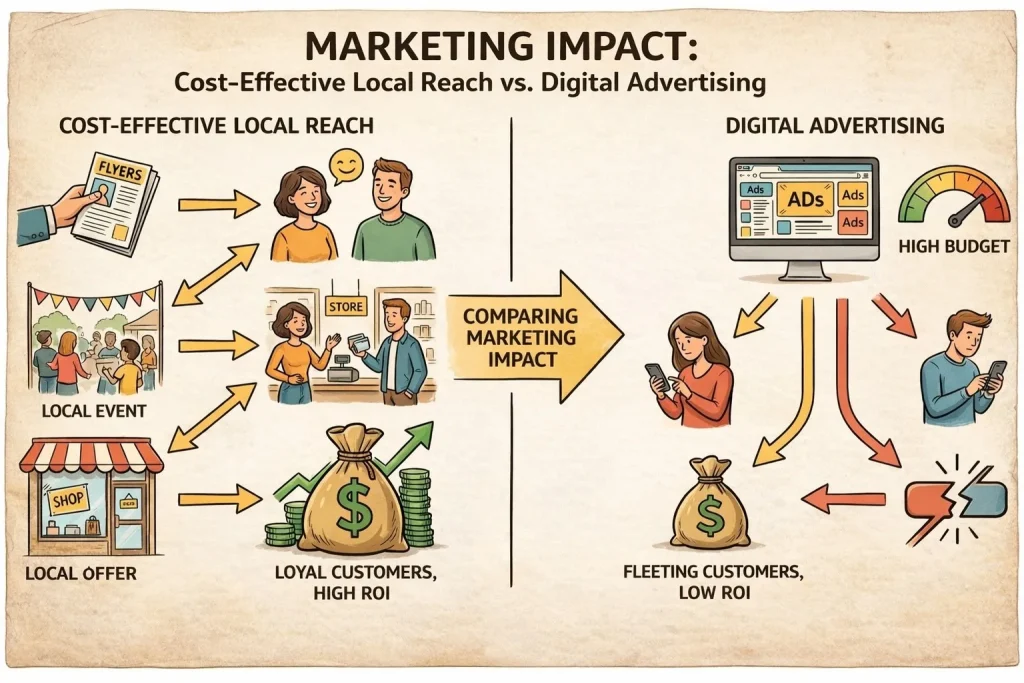
When analyzing the long-term Marketing Impact, physical touchpoints often provide a higher return on investment. Unlike a fleeting social media ad, local visibility creates a persistent brand memory. To maximize this effect, companies should follow a structured approach to local engagement:
- Identify high-traffic community hubs where your target audience gathers.
- Sponsor local events to foster genuine trust and brand loyalty.
- Utilize hyper-local SEO tactics to bridge the gap between physical and digital worlds.
- Measure the Marketing Impact through foot traffic and local referral codes.
One of the most effective ways to optimize your resources is by following a definitive guide to make a daily more productive working flow, ensuring that your local outreach is consistent. Consistency is the engine that drives duurzame Marketing Impact strategieën voor lokale bedrijven, allowing small brands to compete with giants. By focusing on a specific geographic area, you eliminate the “waste” associated with broad digital targeting.
“The true Marketing Impact of local reach is measured not just in clicks, but in the strength of the community relationships you build over time.”
Ultimately, the Marketing Impact of local strategies lies in their longevity. While a digital campaign ends the moment the budget runs out, a strong local reputation continues to pay dividends. By integrating these cost-effective methods, you ensure a balanced Marketing Impact that secures your brand’s future in the physical marketplace while keeping your overhead manageable compared to volatile digital advertising costs.
Measuring the Long-Term ROI of Physical Site Marketing
Quantifying the success of physical site marketing requires a shift from immediate conversion tracking to a comprehensive evaluation of sustained brand equity. Unlike digital ads that offer instant click-through rates, the true Marketing Impact of physical installations often manifests over months or even years. To accurately measure this, businesses must look at foot traffic trends, local search volume increases, and the overall resonance of their physical presence within a specific community.
When analyzing your Marketing Impact, it is essential to integrate offline data with digital analytics. For instance, using location-based heatmaps alongside social media mentions can reveal how a physical site influences online behavior. This holistic view ensures that every dollar spent on signage, experiential pop-ups, or site branding contributes to a measurable bottom line. Understanding the long-term Marketing Impact of physical branding is the key to justifying high upfront costs for permanent installations.
To effectively track your progress, consider the following metrics:
- Incremental foot traffic compared to pre-campaign benchmarks.
- Direct correlation between site visits and local SEO ranking improvements.
- Social media engagement rates originating from location-tagged content.
- Customer lifetime value (CLV) of leads acquired through physical touchpoints.
“The most profound Marketing Impact is often invisible at first glance. it lives in the subconscious familiarity a customer feels when they finally decide to purchase.”
Furthermore, optimizing your internal processes can significantly enhance how you record these results. By following a definitive guide to make a daily more productive working flow, marketing teams can better manage the data collection required for ROI analysis. Consistency in reporting allows for a clearer picture of the Marketing Impact over time.
Ultimately, the Marketing Impact of physical site marketing is found in the synergy between the tangible and the digital. By maintaining a high-quality physical presence, you build a foundation of trust that digital channels simply cannot replicate alone. Continuous monitoring and adjustment of these physical assets ensure that your Marketing Impact remains positive, driving long-term growth and a superior return on investment for your brand.
In conclusion, the marketing impact of large construction site boards extends far beyond simple site identification. These massive visual assets serve as 24/7 brand ambassadors, transforming dull fences into high-traffic advertising hubs. By leveraging strategic design and clear messaging, developers can effectively build anticipation, establish local authority, and generate valuable leads long before a project is completed. They are essential tools for modern urban branding.
Maximizing your marketing impact requires a blend of high-quality materials and professional graphic design. When executed correctly, these boards provide an unparalleled return on investment by capturing the attention of thousands of daily commuters and potential stakeholders. Do not miss the opportunity to turn your perimeter into a powerful promotional engine. Contact our expert team today to design your custom signage and elevate your project’s visibility to the next level immediately.
Veelgestelde Vragen
What is the primary marketing impact of using large construction site boards?
Large construction site boards serve as high-visibility billboards that build brand awareness and local recognition before a project is even finished. This significant marketing impact ensures that potential clients and investors associate your brand with tangible progress and professional reliability.
How do construction site boards influence lead generation?
By displaying clear contact information and project renderings, these boards act as a 24/7 lead generation tool for passersby. The marketing impact is measured by the steady stream of inquiries from interested parties who are directly influenced by the physical presence of the site signage.
Why are high-quality visuals essential for site board effectiveness?
High-quality visuals create a professional image that builds trust and helps stakeholders visualize the final result. Using premium graphics maximizes the aesthetic appeal, ensuring the signage captures attention and leaves a lasting positive impression on the target audience.
Service & Contact
Locatie: Marbella, Spain
Werkgebied: Marbella, Málaga, Costa del Sol, Andalusia, Spain, Remote, Worldwide
Diensten: Construction Site Board Design, Construction Hoarding Branding, Large Format Signage Artwork & Prepress, Construction Fence Banner & Mesh Design, Site Board Printing & Production Management, On-Site Signage Placement Plan, 3D Mockups & Visualizations on Real Site Photos, QR/CTA Lead Capture Integration for Site Boards, Campaign Messaging & Copywriting for Developers
Openingstijden: Mon-Fri 09:00-18:00
